
“Does the VDRL test detect HIV?” is a common question that raises confusion about the purpose of this laboratory examination and what it actually identifies. The VDRL test is one of the most widely used blood tests for sexually transmitted infections (STIs). However, it is important to understand exactly what it detects and which tests are required for accurate HIV diagnosis.
In this article, you will learn the full function of the VDRL test and the appropriate laboratory investigations needed to diagnose Human Immunodeficiency Virus (HIV) accurately.
What Is the VDRL Test?
The VDRL (Venereal Disease Research Laboratory) test is a laboratory blood test designed to detect antibodies produced by the body in response to a specific bacterial infection.
Key characteristics of the VDRL test include:
- Primary purpose: It is exclusively used to detect syphilis infection by identifying the immune response to the causative bacterium.
- Relation to viruses: The VDRL test does not answer the question, “Does the VDRL test detect HIV?” because HIV requires specialized viral testing such as dedicated HIV laboratory tests.
- Accuracy considerations: False-positive results may occur due to autoimmune diseases or other infections, which is why confirmatory testing is sometimes required.
- Routine use: It is commonly requested during premarital screening and pregnancy as part of preventive healthcare protocols.
- Sample type: It is a blood test focused on bacterial infection, not viral pathogens.
The VDRL test plays a critical role in diagnosing bacterial sexually transmitted diseases, and early detection significantly improves treatment effectiveness and prevents long-term complications.
Does the VDRL Test Detect HIV?
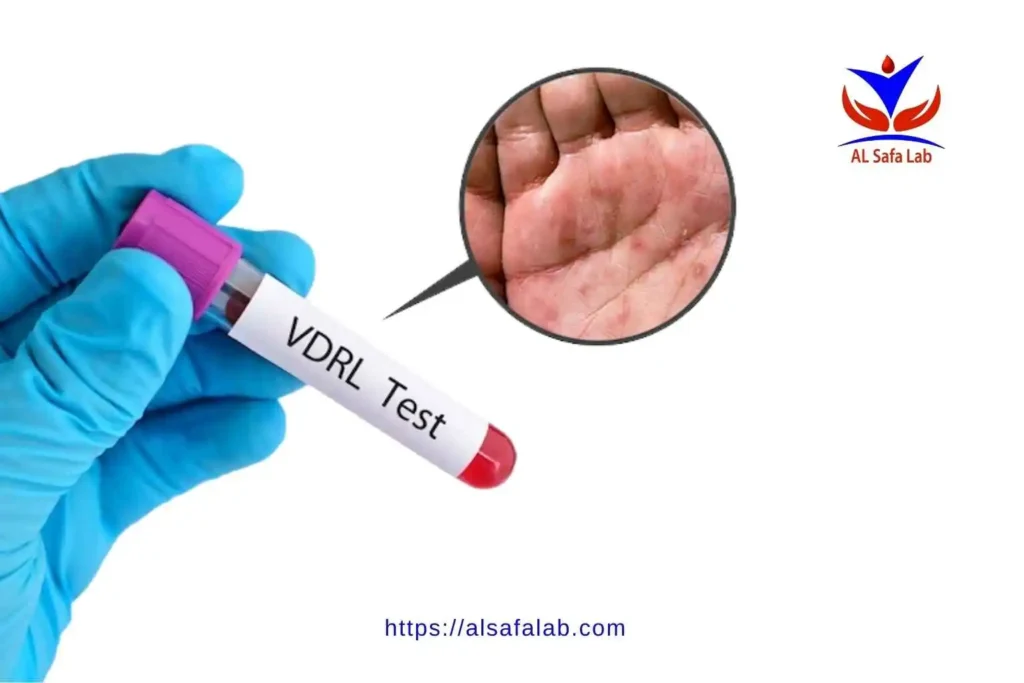
The VDRL (Venereal Disease Research Laboratory) test is designed to detect syphilis only, not Human Immunodeficiency Virus (HIV).
Acquired Immunodeficiency Syndrome (AIDS), the advanced stage of HIV infection, is diagnosed using specific viral tests, including:
- HIV Antibody/Antigen (4th Generation test)
- HIV PCR test for early detection
- Rapid HIV tests
Therefore, the answer to “Does the VDRL test detect HIV?” is clearly no.
Difference Between the VDRL Test and HIV Testing
Laboratory tests for sexually transmitted infections serve different purposes. Understanding these differences ensures accurate diagnosis.
1. VDRL Test
- Medical purpose: Detects syphilis bacteria only. It does not identify viral infections.
- Mechanism: Detects non-specific antibodies produced due to bacterial cell damage.
- Common use: Frequently included in premarital and prenatal screening panels.
- Result interpretation: May be affected by temporary infections or autoimmune conditions, sometimes requiring confirmatory tests.
2. HIV Test
- Target: Detects HIV virus or specific antibodies against it.
- Laboratory techniques: Uses ELISA, combination (combo) testing, or molecular methods.
- Detection accuracy: Identifies viral protein p24 or the virus’s genetic material.
- Window period: Requires a defined incubation period before antibodies become detectable.
Clearly, the VDRL test and HIV testing are entirely separate diagnostic procedures.
Can the VDRL Test Detect Other Diseases?
The VDRL test functions as a screening tool for bacterial infection and is fundamentally different from viral diagnostic tests.
Its role includes:
- Detecting syphilis only.
- Identifying immune responses to a specific bacterium.
- Being used in preventive screening protocols.
- Occasionally producing false positives in conditions such as lupus or respiratory infections.
- Requiring confirmatory testing when results are positive.
The misconception that the VDRL test detects HIV is medically inaccurate.
Tests Required for Accurate HIV Diagnosis
Accurate diagnosis of HIV depends on advanced laboratory techniques targeting viral components directly.
Approved diagnostic pathways include:
- HIV Antibody Test: Detects immune response after the window period.
- Combination (4th Generation) Test: Detects both antibodies and p24 antigen for earlier identification.
- Viral Load (PCR) Test: Detects HIV genetic material; used for confirmation and treatment monitoring.
- Differentiation Assays: Used to confirm and classify HIV infection.
- Confirmatory Testing: Required if initial results are positive.
Scientific evidence confirms that the VDRL test does not replace dedicated HIV testing.
Importance of the VDRL Test
The VDRL test remains essential for detecting syphilis as a bacterial infection. Its importance includes:
- Specialized detection of syphilis bacteria.
- Clear distinction from viral immunity testing.
- Routine use in preventive health screenings.
- Awareness of possible false-positive results.
- Laboratory mechanism based on bacterial cell damage detection.
It does not detect HIV, which requires independent viral testing methods.
What Is the Appropriate Test for HIV Diagnosis?
The correct test for diagnosing HIV is a specialized HIV test, not the VDRL test.
If you are still asking, “Does the VDRL test detect HIV?” the medical answer is no. Choosing the appropriate laboratory investigation is the safest and most accurate path toward diagnosis and proper medical follow-up.
Frequently Asked Questions
Does the VDRL test detect herpes?
No. The VDRL test is designed to detect syphilis only and does not identify herpes virus (HSV).
Can lupus cause a false-positive syphilis test?
Yes. Lupus and other autoimmune diseases may cause a false-positive VDRL result.
Can a syphilis test be positive even if you are not infected?
Yes. False-positive results may occur due to pregnancy, autoimmune conditions, certain infections, or chronic diseases, requiring confirmatory testing such as TPHA.
References:
