
Liver enzyme tests are among the most commonly requested investigations during routine medical check-ups. Many patients are surprised to find that their liver enzymes are high despite having no obvious symptoms. This raises an important question: When should we worry if liver enzymes are high? Does this elevation indicate a serious disease, or is it simply a temporary condition?
In clinical practice, having liver enzymes high may be mild and transient in some cases, while in others it may indicate a serious underlying liver disorder. The clinical significance depends on the degree of elevation, the specific enzyme involved, associated symptoms, and the patient’s medical history.
What Are Liver Enzymes?
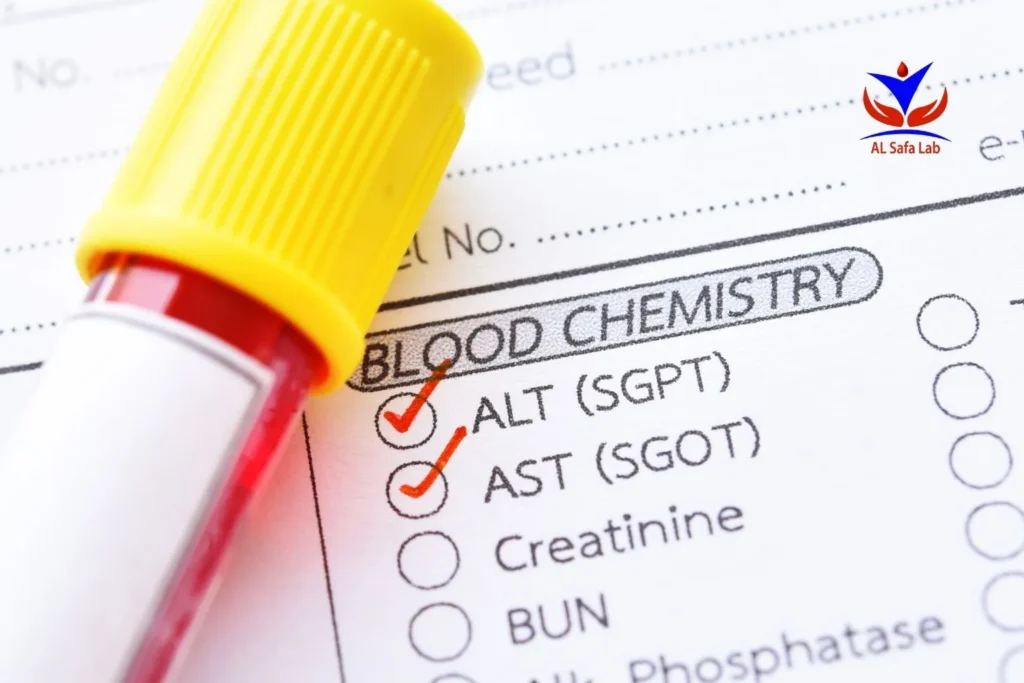
Liver enzymes are proteins released from liver cells that play an essential role in metabolic and detoxification processes. The most important liver enzymes include:
- ALT (Alanine Aminotransferase)
- AST (Aspartate Aminotransferase)
- ALP (Alkaline Phosphatase)
- GGT (Gamma-Glutamyl Transferase)
These enzymes leak into the bloodstream when liver cells are damaged or inflamed, causing blood levels to rise.
Normal Values of Liver Enzymes
Reference ranges may vary slightly between laboratories, but approximate normal values are:
| Enzyme | Normal Range |
| ALT | Up to 40 U/L |
| AST | Up to 40 U/L |
| ALP | 44–147 U/L |
| GGT | Up to 60 U/L |
Any value above these limits means liver enzymes are high and should be medically evaluated.
✅ Read More About : Liver Function Panel
When Are high liver Enzymes Considered Dangerous?
1. Marked Elevation
When liver enzymes exceed:
- Three times the upper limit of normal (ULN)
- Or reach hundreds or thousands of units
2. Persistent Elevation
If liver enzymes remain high for more than 2–4 weeks without improvement.
3. Presence of Symptoms
Such as:
- Jaundice (yellowing of skin and eyes)
- Right upper abdominal pain
- Persistent nausea or vomiting
- Loss of appetite
- Severe fatigue
4. Positive Medical History
Including:
- Viral hepatitis
- Liver cirrhosis
- Alcohol consumption
- Long-term medication use
what causes high liver enzymes
Mild and Common Causes:
- Fatty liver disease
- Excessive use of painkillers (especially paracetamol)
- Antibiotics
- Obesity
- High triglyceride levels
- Intense physical exercise before testing
Serious Causes:
- Viral hepatitis (A, B, C)
- Liver cirrhosis
- Alcoholic liver disease
- Liver tumors
- Bile duct obstruction
- Drug-induced liver injury
ALT vs AST: What Does the Pattern Mean?
When liver enzymes are high, the pattern of elevation is clinically important:
- High ALT usually reflects direct liver cell injury.
- High AST may be related to liver, muscles, or heart.
- Elevation of both ALT and AST often suggests hepatitis or active liver inflammation.
Is Every Case of Liver Enzymes High Dangerous?
No. In many patients, the elevation is mild and temporary, especially if:
- It is less than two times normal
- There are no symptoms
- It appears for the first time
- It improves on repeat testing
When Is Liver Enzymes High Truly Concerning?
It becomes medically concerning when:
- Levels exceed five times normal
- Associated with jaundice
- There is impaired clotting function (high INR)
- Elevated bilirubin
- Severe abdominal pain
- Dark urine or pale stools
How Is the Cause Diagnosed?
Evaluation of liver enzymes high may include:
- Repeat blood tests after two weeks
- Viral hepatitis screening
- Lipid profile
- Abdominal ultrasound
- MRI in selected cases
- Autoimmune markers
What Should You Do If Liver Enzymes Are High?
- Do not ignore the results
- Avoid relying on the internet only
- Consult a hepatologist or internal medicine specialist
- Stop unnecessary medications
- Avoid alcohol
- Follow a healthy diet
Can Liver Enzymes Be Reduced Naturally?
Yes, in mild cases, liver enzymes may improve through:
- Weight loss
- Reducing fat intake
- Eating vegetables and nutrient-rich foods
- Drinking enough water
- Avoiding fried foods
- Regular exercise

What Is the Dangerous Level of Liver Enzymes?
Clinically, liver enzymes high are considered significant when they exceed:
- 3× ULN (approximately >120 U/L for ALT or AST)
They are considered a medical emergency when they reach:
- >10× ULN (approximately >400–500 U/L),
especially if exceeding 1000 U/L.
Medical Classification:
- < 2× ULN → Mild elevation
- 2–5× ULN → Moderate
- 5× ULN → Severe (requires urgent evaluation)
- 10× ULN → Medical emergency
Important note: Medical decisions should not rely on enzyme levels alone, but also on symptoms and other liver function tests such as bilirubin, INR, and albumin.
Frequently Asked Questions (FAQ)
Can high liver enzymes cause death?
High liver enzymes alone do not directly cause death. However, they may indicate a serious underlying liver condition that can become life-threatening if left untreated.
What happens when your liver enzymes are high?
When your liver enzymes are high, it means that liver cells are damaged or inflamed and are releasing enzymes into the bloodstream.
what does high liver enzymes mean
- High liver enzymes mean that liver cells are damaged or inflamed, causing these enzymes to leak into the bloodstream.
- This usually indicates liver stress or injury, but the significance depends on how high the levels are, how long they remain elevated, and whether other liver tests are abnormal.
Does stress make liver enzymes high?
Psychological stress alone does not directly cause pathological elevation of liver enzymes. However, stress may indirectly lead to slight increases due to lifestyle changes, increased medication or stimulant use, sleep disturbances, or muscle tension (which may raise AST). These elevations are usually mild (less than 2× normal).
Is liver enzymes high dangerous in children?
Not always. The risk depends on the degree and underlying cause. However, persistent or significant elevation in children should never be ignored and requires medical evaluation even in the absence of symptoms.
Does liver enzymes high mean hepatitis?
Not necessarily, but hepatitis should always be ruled out.
Can liver enzymes high be cured?
Yes, in most cases, especially when the underlying cause is identified and treated.
Does fasting affect liver enzyme tests?
Not significantly, but fasting is preferred in some laboratory tests.
When should liver enzymes be repeated?
Usually after 2 to 4 weeks, depending on the physician’s recommendation.
References:
Source 1
Source 2
