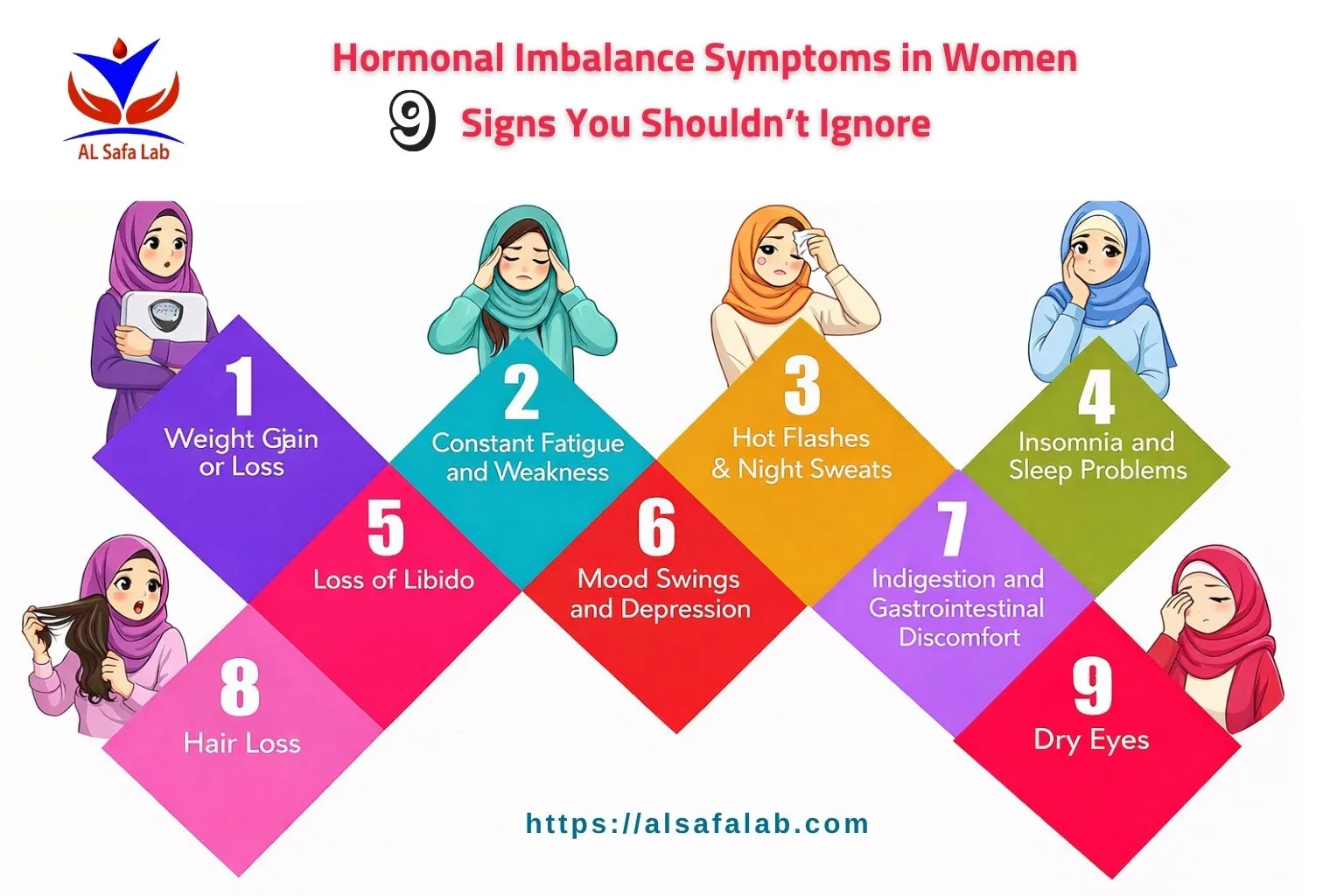
Hormonal Imbalance Symptoms in Women | 9 Key Signs
Hormonal imbalance symptoms in women can often go unnoticed at first, yet they may signal underlying health issues that require attention.
From irregular periods and unexplained weight changes to mood swings and fatigue, these symptoms can impact your daily life and overall well-being.
Understanding these signs early helps you take the right step toward accurate diagnosis—especially through targeted hormone testing.
What is Hormonal Imbalance?
Hormonal imbalance occurs when there is too much or too little of certain hormones in the body, such as:
- Estrogen
- Progesterone
- Thyroid hormones
- Testosterone
Even small changes in hormone levels can significantly affect your body, including your menstrual cycle, weight, mood, and skin health.
Read More: Hormonal Imbalance Symptoms in Women | When to Get Tested?
Common Hormonal Imbalance Symptoms in Women
1. Irregular Menstrual Cycle
- Missed or delayed periods
- Heavy or very light bleeding
- Unpredictable cycle timing
One of the earliest and most noticeable signs of hormonal imbalance.
2. Sudden Weight Gain or Loss
- Unexplained weight gain
- Difficulty losing weight
- Fat accumulation in specific areas
Often linked to thyroid disorders or insulin resistance.
3. Hair Loss or Excess Hair Growth
- Noticeable hair thinning or shedding
- Unwanted facial or body hair
May indicate high androgen (testosterone) levels.
4. Skin Problems (Acne)
- Sudden acne breakouts
- Especially around the jawline and chin
A strong indicator of hormonal imbalance.

5. Mood Swings and Anxiety
- Unexplained mood changes
- Increased stress or depression
Hormones play a major role in brain chemistry.
6. Constant Fatigue
- Feeling tired all the time
- Low energy levels
Could be related to thyroid or cortisol imbalance.
7. Sleep Disturbances
- Insomnia
- Poor sleep quality
Often caused by hormonal fluctuations.
8. Low Libido
- Reduced sexual desire
A common symptom of hormonal changes.
9. Vaginal dryness.
A hormone test is the first step toward understanding your body and getting the right treatment.
What Causes Hormonal Imbalance?
- Polycystic Ovary Syndrome (PCOS)
- Thyroid disorders
- Chronic stress
- Poor diet
- Certain medications
- Perimenopause or menopause
When Should You Get a Hormone Test?
You should consider hormone testing if:
- Symptoms persist over time
- You experience multiple symptoms together
- You have irregular periods
- You’re trying to conceive without success
- You have severe hair loss or persistent acne
Testing is the most accurate way to identify the root cause instead of guessing.
Key Hormone Tests for Women
At a medical laboratory, the following tests are commonly recommended:
- TSH (Thyroid Function Test)
- LH & FSH
- Estrogen & Progesterone
- Testosterone
- Prolactin
- TSH Blood Test
These tests help provide a clear diagnosis and guide proper treatment.
Why Early Diagnosis Matters
- Prevents complications
- Enables faster treatment
- Protects against long-term issues such as:
- Infertility
- Severe menstrual disorders
- Chronic thyroid problems
How to Prevent Hormonal Imbalance
- Maintain a balanced diet
- Reduce stress levels
- Get enough sleep
- Exercise regularly
- Monitor any unusual symptoms early
Can Hormonal Imbalance Be Treated?
Yes, in most cases hormonal imbalance can be managed through:
- Medical treatment
- Lifestyle changes
- Regular follow-ups
However, the first step is always accurate diagnosis through lab testing.

FAQ
What are the common symptoms of hormonal imbalance in women?
Common symptoms include irregular periods, hair loss, weight changes, acne, mood swings, fatigue, and sleep disturbances.
Can hormonal imbalance cause infertility?
Yes, hormonal imbalance can affect ovulation and menstrual cycles, which may lead to difficulty in conceiving.
When should I get a hormone test?
You should get tested if you experience persistent symptoms such as irregular periods, unexplained weight changes, acne, or difficulty conceiving.
Is hormonal imbalance treatable?
Yes, hormonal imbalance is often treatable with proper diagnosis, medications, and lifestyle changes.
References: