HIV RNA Quantitative PCR Test and Viral Load Results
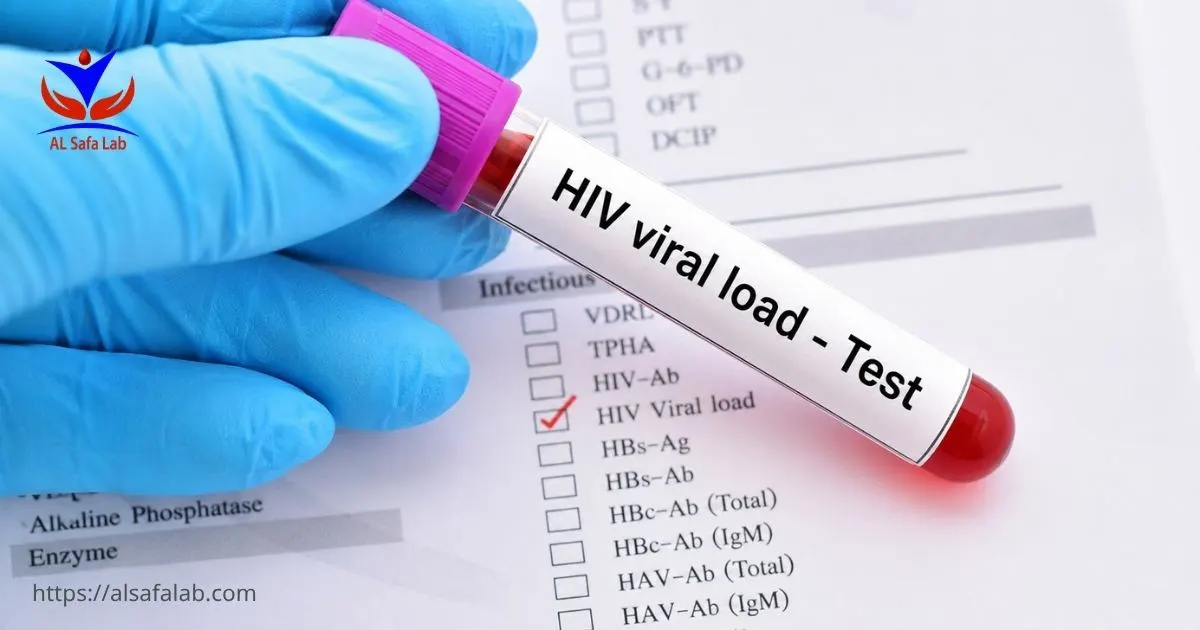
The HIV RNA Quantitative PCR Test, commonly known as the HIV Viral Load Test, is a molecular blood test that measures the amount of HIV genetic material (RNA) circulating in the bloodstream. Unlike antibody-based HIV tests that detect the body’s immune response, this test directly measures the virus itself and reports the viral load as the number of HIV RNA copies per milliliter of blood.
The HIV RNA Quantitative PCR Test is primarily used to monitor people diagnosed with HIV, evaluate how well antiretroviral therapy (ART) is working, and help healthcare providers make informed treatment decisions. In selected clinical situations, it may also support the assessment of suspected early HIV infection when recommended by a healthcare professional.
What Is the HIV RNA Quantitative PCR Test?
HIV RNA Quantitative PCR is a highly sensitive molecular test that detects and quantifies HIV RNA in a blood sample using polymerase chain reaction (PCR) technology.
Results are typically reported as:
- HIV RNA copies/mL
- Log copies/mL
- Detected
- Not Detected
The measured amount of HIV RNA is referred to as the viral load, which reflects how actively the virus is replicating in the body. Because it measures viral RNA rather than antibodies, this test serves a different purpose from routine HIV PCR screening tests.
When Is the HIV RNA Quantitative PCR Test Recommended?
Healthcare providers may request this test in several clinical situations, including:
After HIV Diagnosis
A baseline viral load helps determine the amount of HIV present before or around the start of treatment.
During Antiretroviral Therapy
Regular viral load testing allows physicians to monitor treatment effectiveness and confirm that HIV replication is being successfully suppressed.
After Starting or Changing Treatment
The test is commonly repeated after initiating or modifying antiretroviral therapy to evaluate how well the new treatment is working.
Ready to Get Tested?
Whether you’re booking an HIV RNA Quantitative PCR Test or choosing a comprehensive STD screening package, Al Safa Medical Laboratory makes testing simple, private, and convenient. Enjoy professional Home Blood Sample Collection, rapid accredited results, and secure result delivery by WhatsApp or printed report—all handled with the highest level of confidentiality.
When Viral Load Increases
A persistent rise in viral load may prompt further evaluation of medication adherence, drug resistance, drug interactions, or other clinical factors.
Selected Cases of Suspected Early HIV Infection
In certain situations, healthcare providers may use HIV RNA testing when recent HIV exposure is suspected and standard screening results are inconclusive. However, HIV RNA Quantitative PCR is primarily intended for viral load monitoring, not routine HIV screening.
A single viral load result should always be interpreted alongside previous laboratory results, treatment history, and the patient’s overall clinical condition.
HIV RNA Quantitative PCR vs Other HIV Tests
Although several laboratory tests are used in HIV diagnosis and follow-up, each serves a different purpose.
| Test | Detects | Primary Purpose |
| HIV Antibody Test (HIV Ab) | HIV antibodies | Routine HIV screening |
| Fourth-Generation HIV Test | HIV antibodies + p24 antigen | Earlier HIV diagnosis |
| HIV RNA Quantitative PCR | HIV RNA (viral load) | Monitoring HIV treatment |
| HIV RNA Qualitative Test | Presence of HIV RNA | Selected diagnostic situations |
The HIV RNA Quantitative PCR Test should not be considered a replacement for routine HIV screening. Instead, it is the preferred laboratory test for measuring viral load in individuals diagnosed with HIV.
Understanding HIV-1 RNA Quantitative PCR Results
The laboratory report may include:
- A numerical viral load (copies/mL)
- A logarithmic value (Log copies/mL)
- A qualitative statement such as Detected or Not Detected
Interpretation depends on the reason for testing, the patient’s treatment status, previous viral load measurements, and the laboratory assay used.
HIV-1 RNA Detected
- A detected result means HIV RNA was identified in the blood sample. When the viral load falls within the assay’s measurable range, the report provides the exact number of viral copies per milliliter.
- For individuals receiving HIV treatment, physicians compare current and previous viral load measurements to evaluate treatment response.
- When HIV has not previously been diagnosed, additional clinical assessment and confirmatory testing may be necessary.
HIV RNA Below the Quantification Limit
Some reports may include statements such as:
- Detected, below the quantification limit
- Less than 20 copies/mL
- Below the lower limit of quantification
This indicates that HIV RNA was detected, but the amount is too low to be measured accurately. It should not automatically be interpreted as identical to Not Detected, as reporting thresholds differ between laboratory platforms.
Low or High Viral Load
In general:
- A decreasing viral load suggests that treatment is effectively suppressing HIV replication.
- A persistently increasing viral load may indicate treatment failure, medication non-adherence, drug resistance, or other clinical factors that require medical evaluation.
Healthcare providers assess viral load trends over time rather than relying on a single measurement.
What Does “HIV-1 RNA Not Detected” Mean?
An HIV-1 RNA Not Detected result means that the amount of HIV RNA in the blood is below the detection capability of the testing assay.
For patients receiving effective antiretroviral therapy, this generally indicates successful viral suppression and is the desired treatment outcome.
However, Not Detected does not mean:
- HIV has been cured.
- HIV has been completely eliminated from the body.
- Treatment can be stopped.
- Future monitoring is unnecessary.
HIV can remain in latent reservoirs within the body even when viral RNA is no longer detectable in the bloodstream. Treatment should only be modified or discontinued under the supervision of an HIV specialist.
Is There a Normal Range for HIV-1 RNA by PCR?
Unlike blood glucose or cholesterol tests, HIV-1 RNA by PCR does not have a traditional normal range.
For people without HIV infection, HIV RNA would generally be not detected.
For individuals diagnosed with HIV, the treatment goal is to reduce the viral load below the assay’s detection or quantification limit.
Most modern laboratory assays detect viral loads as low as approximately 20–50 copies/mL, although the exact threshold depends on the testing platform used.
When interpreting results, physicians consider:
- Previous viral load measurements
- Current treatment status
- Medication adherence
- The assay’s detection limit
- The patient’s clinical history
What Is the HIV-1 RNA Quantitative Real-Time PCR Window Period?
- The window period refers to the time between HIV exposure and the point at which a laboratory test can reliably detect infection.
- Because HIV RNA tests detect the virus itself rather than antibodies, they may identify HIV earlier than antibody-based tests. In many cases, HIV RNA can become detectable approximately 10 to 33 days after exposure, although this may vary depending on individual circumstances and the use of medications such as PEP or PrEP.
- Despite its ability to detect HIV earlier in selected situations, the HIV RNA Quantitative PCR Test is primarily intended for viral load monitoring, not routine HIV screening.
- Anyone concerned about recent HIV exposure should consult a healthcare professional to determine the most appropriate test and the optimal testing time.
How Is the HIV RNA Quantitative PCR Test Performed?
The HIV RNA Quantitative PCR Test requires a venous blood sample collected from a vein in the arm.
After collection, the sample is processed in a specialized molecular laboratory where advanced PCR technology detects and quantifies HIV RNA.
The result is then reported as the number of viral RNA copies per milliliter of blood or according to the reporting format of the laboratory assay.
Because molecular testing is highly sensitive, proper sample collection, handling, and transportation are essential to ensure accurate and reliable results.
Do You Need to Fast Before the Test?
No. Fasting is not usually required before an HIV RNA Quantitative PCR Test.
Patients can generally eat and drink normally unless another laboratory test ordered at the same time requires fasting.
Before sample collection, you should inform your healthcare provider or the laboratory if you:
- Are currently receiving antiretroviral therapy (ART).
- Have recently used PEP or PrEP.
- Have had a recent possible HIV exposure.
- Are repeating a previous HIV RNA test.
- Are pregnant.
Providing this information helps ensure the result is interpreted in the appropriate clinical context.
How Long Does It Take to Get HIV RNA Quantitative PCR Results?
At Al Safa Medical Laboratory, HIV RNA Quantitative PCR results are available within a maximum of four days.
Although turnaround time may vary depending on sample processing requirements and laboratory workflow, patients typically receive their results within no more than four days from the time the sample is collected.
Fast and reliable reporting allows healthcare providers to make timely treatment decisions and monitor HIV viral load without unnecessary delays.
How Often Should the HIV Viral Load Be Measured?
The frequency of HIV viral load testing depends on each patient’s treatment stage and clinical condition.
Healthcare providers commonly request the test:
- Before or around the start of HIV treatment.
- After starting or changing antiretroviral therapy.
- During routine follow-up to confirm continued viral suppression.
- Whenever a previously suppressed viral load becomes detectable or begins to increase.
Your treating physician will determine the most appropriate testing schedule based on your individual medical condition.
Why Choose Al Safa Medical Laboratory?
At Al Safa Medical Laboratory, we are committed to providing accurate molecular testing supported by strict quality standards and complete patient confidentiality.
Our HIV RNA Quantitative PCR service offers:
- Accurate HIV viral load measurement using molecular PCR technology.
- Confidential sample collection and result reporting.
- Results available within a maximum of four days.
- Home Blood Sample Collection service.
- Coverage across Nasr City, New Cairo, Heliopolis, and nearby areas.
- Professional laboratory support regarding sample collection requirements and available HIV testing services.
Every sample is handled according to established laboratory quality procedures to ensure dependable results for clinicians and patients.
Book Your HIV RNA Quantitative PCR Test Now
Frequently Asked Questions
Is HIV RNA Quantitative PCR the same as an HIV Viral Load Test?
Yes. HIV RNA Quantitative PCR is commonly referred to as the HIV Viral Load Test because it measures the amount of HIV RNA circulating in the blood.
What does HIV-1 RNA Not Detected mean?
It means that HIV RNA was not detected above the assay’s detection limit. For patients receiving effective HIV treatment, this usually indicates successful viral suppression but does not mean HIV has been cured.
Is there a normal range for HIV-1 RNA by PCR?
No. HIV RNA Quantitative PCR does not have a conventional normal range. Instead, healthcare providers interpret results based on viral load, treatment status, previous measurements, and the laboratory assay used.
Can HIV RNA PCR detect HIV during the window period?
In selected situations, HIV RNA testing can detect infection earlier than antibody-based tests, often approximately 10 to 33 days after exposure. However, it is not the routine first-line screening test for most people.
Is HIV RNA Quantitative PCR used for routine HIV screening?
No. Its primary purpose is to measure HIV viral load and monitor treatment effectiveness. Routine HIV screening usually begins with an HIV antibody test or a fourth-generation HIV Ag/Ab test.
Do I need to fast before the test?
No. Fasting is generally not required, unless another blood test scheduled at the same visit requires fasting.
Can I stop treatment if my viral load is undetectable?
No. An undetectable viral load indicates successful suppression of HIV but does not mean the virus has been eliminated from the body. Treatment should only be changed or stopped under the supervision of your healthcare provider.