
DHT Hormone in Women
DHT hormone in women may affect hair health, skin condition, menstrual cycle regularity, and fertility, especially when androgen activity becomes higher than normal or when hair follicles are highly sensitive to DHT.
DHT, also known as dihydrotestosterone, is a hormone derived from testosterone. Although it is usually present in smaller amounts in women than in men, changes in DHT activity may contribute to symptoms such as hair thinning, acne, oily skin, unwanted facial or body hair, and irregular periods.
In this article, we explain the symptoms of high DHT in women, what causes it, how it may be linked to female hair loss, how to test DHT levels, and when medical treatment may be needed.
Read More About: Dihydrotestosterone Test: DHT Blood Test for Hair Loss
Table of Contents
ToggleWhat Is DHT Hormone in Women?
DHT, or dihydrotestosterone, is an androgen hormone produced when the body converts testosterone into DHT through an enzyme called 5-alpha reductase.
Women naturally produce small amounts of androgens, including testosterone and DHT. These hormones play a role in normal body functions, but when androgen activity becomes excessive, or when certain tissues become highly sensitive to androgens, symptoms may appear.
In women, DHT may affect:
- Hair follicles.
- Scalp hair density.
- Skin oil production.
- Acne tendency.
- Facial and body hair growth.
- Menstrual cycle regularity.
- Ovulation and fertility in some cases.
DHT is not the only cause of female hair loss, but it may be one of the contributing factors, especially in women with female pattern hair loss or PCOS-related androgen imbalance.
How DHT Causes Hair Loss
DHT hormone in women hair loss is a common search topic because DHT may contribute to hair thinning when it affects sensitive hair follicles.
When hair follicles are sensitive to DHT, they may gradually shrink in a process called follicle miniaturization. Over time, the hair shaft becomes thinner, weaker, and shorter. This can lead to reduced hair density, especially around the crown, middle part, or top of the scalp.
However, female hair loss is usually more complex than one hormone alone. Other possible causes include:
- Iron deficiency.
- Thyroid disorders.
- Vitamin D deficiency.
- Stress.
- Postpartum hormonal changes.
- Autoimmune conditions.
- Genetics.
- PCOS.
- Certain medications.
That is why testing and medical evaluation are important before starting treatment.
Read More About: Hair Loss Test Package
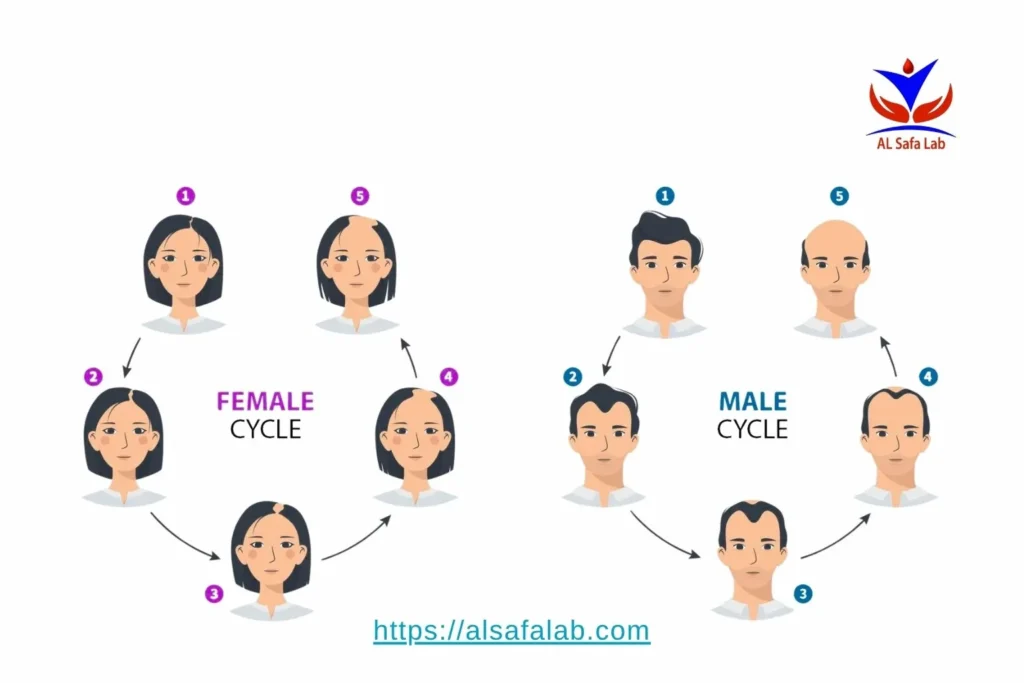

DHT Hormone in Females: Symptoms to Watch For
DHT hormone in females symptoms may overlap with other hormonal conditions. Common signs that may suggest increased androgen activity include:
- Hair thinning from the crown or middle of the scalp.
- Wider hair parting.
- Increased hair shedding.
- Acne, especially persistent or adult acne.
- Oily skin.
- Excess facial hair, especially on the chin, upper lip, or jawline.
- Excess body hair.
- Irregular or missed periods.
- Difficulty getting pregnant.
- Symptoms of PCOS, such as weight gain or insulin resistance.
These symptoms do not always confirm high DHT, but they are important warning signs that may require hormonal testing.
What Causes High DHT in Women?
What causes high DHT in women can vary from one patient to another. In many cases, the problem is not only the DHT level itself, but also how sensitive the hair follicles and skin are to androgen hormones.
Common causes include:
1. Polycystic Ovary Syndrome, or PCOS
PCOS is one of the most common causes of androgen-related symptoms in women. It may cause irregular periods, acne, excess facial or body hair, weight changes, insulin resistance, and fertility problems. MedlinePlus lists irregular or missed periods, excessive hair growth, oily skin, severe acne, weight gain, and infertility among common PCOS-related symptoms.
2. High Testosterone Levels
DHT is produced from testosterone. Therefore, when testosterone levels are high, DHT activity may also increase or become more noticeable.
Read More: How to Increase Testosterone Levels Fast | Proven Methods
3. Increased 5-Alpha Reductase Activity
The enzyme 5-alpha reductase converts testosterone into DHT. Some women may have increased enzyme activity, which can increase DHT effects even if some hormone test results appear close to normal.
4. Insulin Resistance and Weight Gain
Insulin resistance may increase androgen activity, especially in women with PCOS. This can contribute to acne, irregular periods, unwanted hair growth, and hair thinning.
5. Adrenal Gland Disorders
The adrenal glands also produce androgen hormones. Some adrenal disorders may increase androgen levels and contribute to symptoms similar to high DHT.
6. Certain Medications or Hormonal Supplements
Anabolic steroids, unregulated supplements, or hormone-related products may disturb androgen balance and worsen symptoms.
7. Hair Follicle Sensitivity to DHT
Some women do not have clearly high DHT levels, but their hair follicles are genetically sensitive to DHT. In this case, even normal androgen levels may contribute to female pattern hair loss.
8. Ovarian or Adrenal Tumors
These are rare causes, but they may be considered if symptoms appear suddenly, progress rapidly, or are unusually severe.
How to Test DHT Levels in Women
How to test DHT levels in women usually involves a blood test that measures the level of dihydrotestosterone in the bloodstream.
A doctor may request a DHT test along with other hormone tests, such as:
- Total testosterone.
- Free testosterone.
- DHEA-S.
- Androstenedione.
- LH and FSH.
- Prolactin.
- Thyroid function tests.
- Insulin resistance markers.
- Ferritin and vitamin D if hair loss is present.
A DHT test may be useful when:
- Hair loss continues despite using minoxidil or supplements.
- Hair thinning follows a female pattern hair loss distribution.
- Acne, oily skin, and excess hair growth appear together.
- Periods are irregular or absent.
- PCOS is suspected.
- There is a family history of androgenetic hair loss.
- Treatment decisions require a clearer hormonal picture.
Testing helps avoid random treatment and supports a more accurate diagnosis.

Where Can You Get a DHT Blood Test?
If your doctor recommends hormone testing, you can take a DHT blood test at a trusted medical laboratory.
For patients who prefer comfort and privacy, Al Safa Lab provides medical testing services.
Depending on availability, patients may request lab services and ask about home sample collection, hormone test options, result delivery, and booking details.
A professional laboratory test can help your doctor understand whether DHT or other hormones may be contributing to your symptoms.

Low DHT in Women: Is It a Problem?
Low DHT in women is less commonly discussed than high DHT. In many cases, low DHT is not interpreted alone. Doctors usually assess it together with testosterone, estrogen, LH, FSH, adrenal hormones, thyroid function, and clinical symptoms.
Low DHT may reflect reduced androgen activity, but symptoms are often non-specific. Therefore, treatment should not be based on DHT alone without a full medical evaluation.
High DHT vs Low DHT in Women
| Point of Comparison | High DHT in Women | Low DHT in Women |
|---|---|---|
| Common concern | Hair thinning, acne, oily skin, and excess hair growth | Usually assessed within broader hormone imbalance |
| Hair effect | May contribute to female pattern hair loss | Not usually linked to DHT-related hair loss |
| Skin effect | May increase oiliness and acne tendency | Symptoms are usually non-specific |
| Menstrual cycle | May be linked to irregular periods, especially with PCOS | Depends on the full hormone profile |
| Fertility | May affect ovulation when linked to androgen excess | Depends on the underlying cause |
| Diagnosis | Blood tests and medical evaluation | A full hormone profile may be needed |
| Treatment direction | Treat the cause and reduce androgen effect when needed | Treat the confirmed hormonal issue |
Symptoms of Low DHT in Females
Symptoms of low DHT in females are not always clear or specific. They may overlap with other hormonal or metabolic problems.
Possible symptoms may include:
- Low libido.
- Fatigue.
- Low energy.
- Mood changes.
- Reduced muscle strength.
- General hormonal imbalance symptoms.
Because these symptoms may have many causes, diagnosis should be based on medical history, examination, and proper blood tests.
Does High DHT Affect the Menstrual Cycle?
High DHT or increased androgen activity may affect menstrual cycle regularity, especially when it occurs as part of PCOS or another hormonal imbalance.
Increased androgen activity may interfere with ovulation. When ovulation is disrupted, periods may become irregular, delayed, or absent.
This is why symptoms such as hair loss, acne, excess facial hair, and irregular periods should not be treated separately without checking the underlying hormonal balance.
Does DHT Imbalance Affect Fertility?
Yes, DHT imbalance may affect fertility if it is part of a broader androgen disorder.
Possible effects include:
Suppressed Ovulation
High androgen activity may interfere with egg maturation and ovulation, leading to irregular or anovulatory cycles.
Hormonal Imbalance
DHT-related androgen imbalance may affect the relationship between reproductive hormones, which can influence ovulation and cycle regularity.
Association with PCOS
PCOS is one of the common hormonal causes of ovulation problems and infertility. MedlinePlus notes that PCOS can involve menstrual irregularities, skin symptoms, insulin resistance, and infertility.
How to Lower DHT in Women
How to lower DHT in women depends on the underlying cause. There is no single treatment that is suitable for every woman.
The first step is proper diagnosis through medical evaluation and hormone testing.
Common approaches may include:
1. Treating PCOS
If PCOS is the cause, treatment may include weight management, regular physical activity, nutritional changes, cycle regulation, and medications to improve insulin resistance when needed.
2. Hormonal Treatment
Doctors may prescribe hormonal treatments to regulate the menstrual cycle and reduce androgen effects on the skin and hair.
3. Combined Oral Contraceptives
Combined birth control pills may be used in selected cases to regulate periods and reduce androgen-related symptoms such as acne and unwanted hair growth.
4. Anti-Androgen Medications
Anti-androgen medications, such as spironolactone, may be prescribed in some cases to reduce androgen effects on the hair follicles and skin. Harvard Health notes that some women who do not respond to minoxidil may benefit from spironolactone, especially women with PCOS, because of its anti-androgen properties.
Anti-androgen medications should never be used without medical supervision, especially if you are pregnant, planning pregnancy, or not using suitable contraception.
5. Treating Insulin Resistance
Improving insulin resistance may help reduce androgen activity in some women, especially those with PCOS.
6. Avoiding Unregulated Hormonal Supplements
Supplements or steroid-like products that affect hormones should not be used without medical advice.
DHT Hair Loss in Women: Female Treatment Options
DHT hair loss female treatment should be based on the cause and severity of hair loss.
Treatment may include:
Minoxidil
Topical minoxidil is commonly used for female pattern hair loss. Harvard Health states that minoxidil is FDA-approved for both men and women and may require daily use for several months before visible improvement appears.
Anti-Androgen Therapy
If androgen activity is involved, doctors may consider anti-androgen treatment in suitable patients.
Treating PCOS or Hormonal Disorders
If PCOS, adrenal disorders, thyroid problems, or insulin resistance are contributing to hair loss, treating the underlying condition is essential.
Correcting Nutritional Deficiencies
Low ferritin, vitamin D deficiency, or other deficiencies may worsen hair shedding and should be corrected when present.
Low-Level Laser Therapy
Some patients may benefit from low-level laser therapy as part of a hair restoration plan. Harvard Health lists low-level laser therapy among treatment options for hereditary-pattern hair loss.
Dermatology Follow-Up
Hair loss treatment takes time. Regular follow-up helps monitor progress and adjust treatment when needed.
When Should You See a Doctor?
You should consult a doctor if you notice:
- Sudden or severe hair loss.
- Hair thinning with irregular periods.
- Acne that does not respond to usual treatment.
- Excess facial or body hair growth.
- Difficulty getting pregnant.
- Rapidly worsening androgen symptoms.
- Hair loss with fatigue, weight changes, or other systemic symptoms.
- A strong family history of female pattern hair loss.
Early diagnosis may help protect hair follicles before thinning becomes advanced.
Frequently Asked Questions
Can hair loss be treated without a DHT test?
It depends on the case. Some types of hair loss may be treated without a DHT test, but if hormonal hair loss is suspected, testing may help identify whether androgen activity is contributing to the problem. Accurate diagnosis improves treatment selection.
Does DHT cause weight gain?
DHT does not directly cause weight gain. However, high androgen activity may be linked to conditions such as PCOS and insulin resistance, which can be associated with weight gain or difficulty losing weight.
What are the ways to lower DHT in women?
DHT may be lowered by treating the underlying cause, such as PCOS, insulin resistance, or androgen excess. Doctors may prescribe hormonal treatment or anti-androgen medications when appropriate.
How do I know if my DHT hormone is high?
High DHT may be suspected if you have symptoms such as scalp hair thinning, acne, oily skin, excess facial or body hair, irregular periods, or difficulty conceiving. A blood test and medical evaluation are needed to confirm the cause.
What causes high DHT in women?
Common causes include PCOS, high testosterone levels, increased 5-alpha reductase activity, insulin resistance, adrenal disorders, certain medications, hormonal supplements, and hair follicle sensitivity to DHT.
What are the side effects of high androgen levels in women?
High androgen levels may cause acne, oily skin, scalp hair thinning, excess facial or body hair, irregular periods, ovulation problems, and fertility difficulties in some women.
Is DHT hair loss in women reversible?
It depends on the cause, duration, and severity. Early treatment may help slow hair loss and improve density, but long-standing follicle miniaturization may be harder to reverse. A dermatologist can recommend the best treatment plan.
Is DHT testing painful?
No. A DHT test is usually a simple blood test. A small blood sample is collected and sent to the laboratory for analysis.