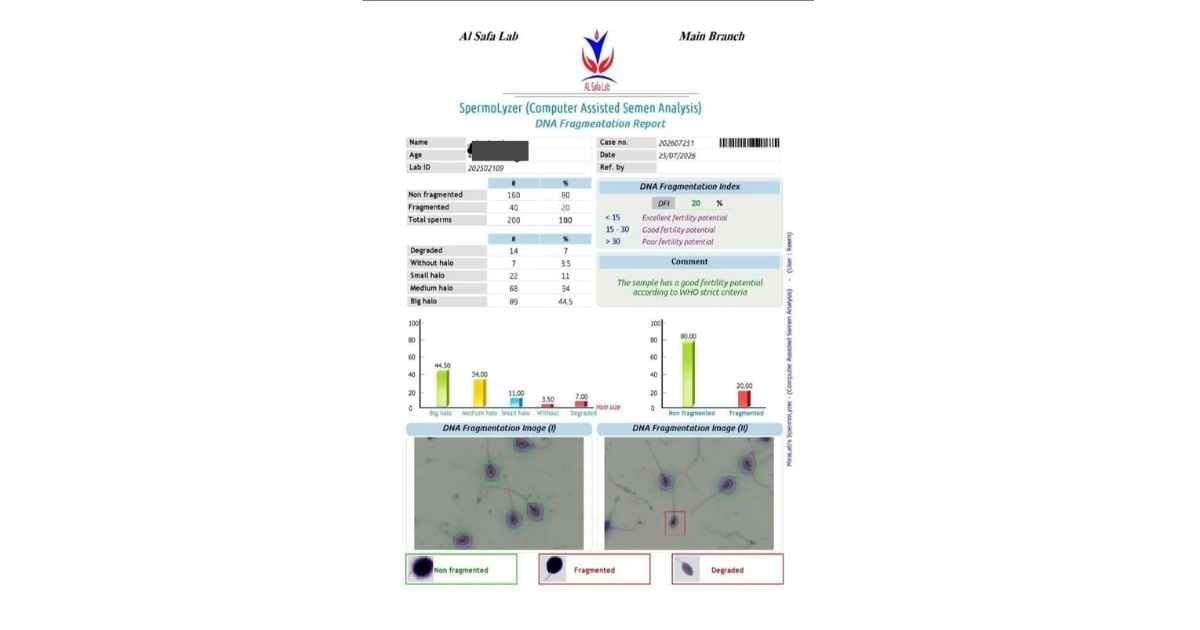
DNA Fragmentation Results | Understanding Your DFI Normal Range
DNA fragmentation results show the proportion of sperm with damaged DNA, usually reported as a DNA Fragmentation Index (DFI). A lower DFI generally indicates less DNA damage, while a higher DFI indicates more fragmentation. Interpretation depends on the test method and laboratory reference range.
What Does DFI Mean in a Sperm DNA Test?
DFI stands for DNA Fragmentation Index. It reflects the proportion of sperm in a tested sample showing measurable DNA fragmentation.
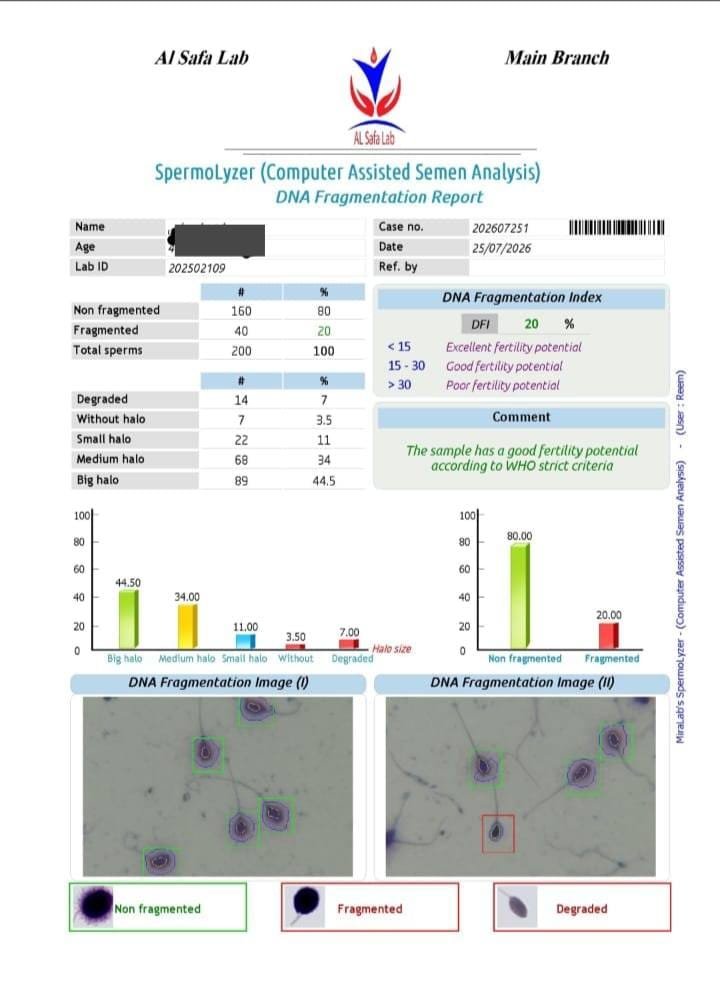
For example, if a laboratory reports a DFI of 20%, this indicates that approximately 20% of the sperm assessed by that specific method showed DNA fragmentation.
DFI provides information that differs from a routine semen analysis. While semen analysis evaluates parameters such as sperm concentration, motility and morphology, DNA fragmentation testing focuses on sperm DNA integrity.
How to Read DNA Fragmentation Test Results
DNA fragmentation results are usually reported as a percentage known as the DNA Fragmentation Index (DFI), which reflects the proportion of sperm showing DNA damage. Rather than treating the result as simply normal or abnormal, it should be interpreted according to the DFI percentage, the testing method used and the laboratory’s reference range.
When reading sperm DNA fragmentation test results, consider three factors together:
- DFI percentage: the level of DNA fragmentation detected.
- Testing method: such as SCSA, TUNEL, SCD or Comet.
- Laboratory reference range: the validated range used by the laboratory performing the test.
This is important because sperm DNA fragmentation assays do not measure DNA damage in exactly the same way, and their cut-off values are not interchangeable. Current clinical guidance recommends that laboratories establish reference values appropriate to the assay they use.
What Is the Normal DFI Range for Sperm DNA Fragmentation?
There is no single universal normal DFI range that applies to every sperm DNA fragmentation test. Reference values vary according to the assay and the laboratory’s validated cut-offs.
For SCSA, one of the most widely studied methods, the European Association of Urology notes that a DFI threshold of around 25% has been associated with reduced pregnancy rates through natural conception or intrauterine insemination (IUI).
A commonly used interpretation for SCSA results is:
| DFI | General interpretation |
| <15% | Low DNA fragmentation |
| 15–30% | Intermediate / increased DNA fragmentation |
| >30% | High DNA fragmentation |
These ranges are useful for understanding SCSA results but should not be applied automatically to TUNEL, SCD, Comet or other assays. Recent reviews also emphasize that assay-specific and laboratory-validated thresholds should take priority when interpreting an individual DFI test report.
For this reason, your DNA fragmentation results should always be compared with the reference range stated on your laboratory report.
What Does a High DFI Result Mean?
A high DFI result means that a greater proportion of the sperm tested shows fragmented or damaged DNA.
Higher sperm DNA fragmentation has been associated with reduced chances of natural conception, pregnancy loss and poorer reproductive outcomes in some fertility-treatment settings. However, DFI alone cannot determine whether pregnancy will or will not occur. The strength of these associations varies between studies, assays and clinical situations.
A high DFI should therefore be interpreted alongside:
- semen analysis results;
- medical and reproductive history;
- previous pregnancies or miscarriages;
- previous fertility-treatment outcomes;
- relevant male and female fertility factors;
- the sperm DNA fragmentation assay used.
A high DFI is a clinical finding, not by itself a diagnosis of infertility.
Can You Have High DFI With a Normal Semen Analysis?
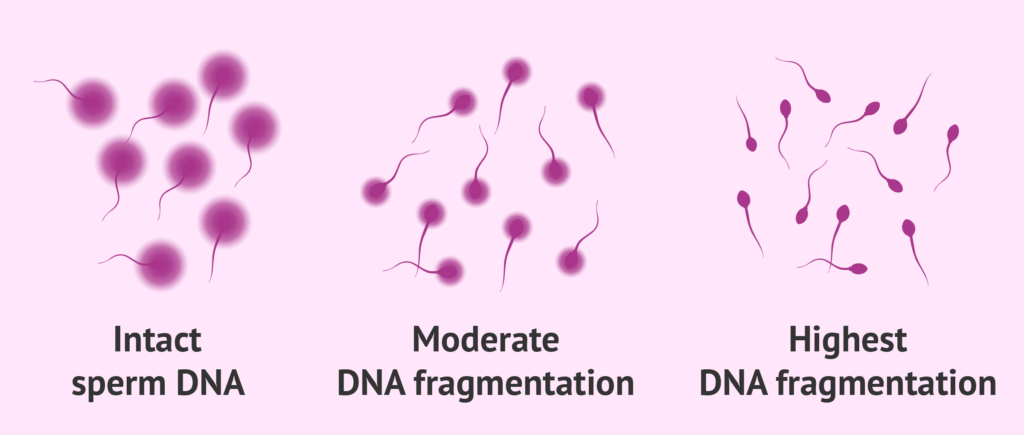
Yes. A high DFI can occur even when a conventional semen analysis is normal.
Semen analysis evaluates parameters such as sperm concentration, motility and morphology, while DFI assesses sperm DNA integrity. Normal conventional semen parameters therefore do not necessarily mean that sperm DNA is free from damage.
Clinical studies have documented elevated sperm DNA fragmentation in men whose conventional semen parameters fall within normal reference ranges.
This is why the two tests provide different types of information about sperm quality.
Why Can DFI Normal Ranges Differ Between Laboratories?
The main reason is that sperm DNA fragmentation is measured using different laboratory techniques. These assays examine different aspects of sperm DNA integrity and therefore should not be interpreted using one universal cut-off.
SCSA
The Sperm Chromatin Structure Assay (SCSA) uses flow cytometry to evaluate the susceptibility of sperm chromatin to DNA denaturation. The result is expressed as a DNA Fragmentation Index.
TUNEL
The TUNEL assay identifies DNA strand breaks by labeling exposed DNA ends. It can be performed using flow cytometry or fluorescence microscopy.
SCD
The Sperm Chromatin Dispersion (SCD) test evaluates chromatin dispersion patterns to distinguish sperm with fragmented DNA from sperm with relatively intact DNA.
Comet Assay
The Comet assay uses single-cell electrophoresis to assess DNA damage within individual sperm cells.
Because these methods differ technically and biologically, the same percentage obtained using two different assays should not automatically be assumed to have the same clinical meaning.
Can DFI Results Change Over Time?
Yes. DFI results can change over time, so one result does not necessarily represent a permanent level of sperm DNA fragmentation.
Factors such as abstinence duration, lifestyle, certain medical or reproductive conditions and sample-related variables may influence sperm DNA fragmentation. Research has also shown that shorter abstinence intervals can reduce measured SDF in some men.
If repeat testing is recommended, using comparable collection and laboratory conditions can make the results easier to compare.
What Can Cause High DNA Fragmentation?
Several factors have been associated with increased sperm DNA fragmentation, including oxidative stress, varicocele, chronic infection, smoking and other lifestyle or reproductive factors.
For a detailed explanation of these factors and possible management approaches, read Sperm DNA Fragmentation: Causes and Treatment.
What Should You Do After Receiving Your DFI Test Report?
Start by checking the reference range provided with your DFI test report rather than comparing your result with a single percentage found online.
A fertility specialist may interpret the result together with semen analysis findings, reproductive history and other relevant fertility factors. This is especially important when the DFI is elevated or when there is a history of infertility, pregnancy loss or unsuccessful fertility treatment.
It is also important to remember that major guidelines do not recommend sperm DNA fragmentation testing as a routine first-line test for every infertile couple. Its usefulness depends on the individual clinical situation.
If you have not yet had the test, learn more about the Sperm DNA Fragmentation Test, including testing details and preparation requirements.
Frequently Asked Questions About DFI Results
What Is a Normal DFI Percentage?
There is no universal normal DFI percentage for every testing method. The appropriate reference range depends on the assay and laboratory. For SCSA, values below approximately 15% are commonly described as low fragmentation, while values above 30% are often considered high, but laboratory-specific ranges should always be used.
Is a DFI of 20% Normal?
A DFI of 20% may fall within an intermediate range depending on the assay and laboratory. It should not automatically be labelled normal or abnormal without considering the testing method and reference values.
Is a DFI Above 30% High?
For SCSA, a DFI above approximately 30% is commonly regarded as high sperm DNA fragmentation. However, this threshold should not automatically be applied to other assays such as TUNEL, SCD or Comet.
Does a High DFI Mean Infertility?
No. A high DFI may be associated with reduced reproductive potential, but it does not by itself diagnose infertility or determine whether pregnancy can occur.
Can You Get Pregnant With a High DFI?
Yes. Pregnancy can occur with a high DFI. Higher sperm DNA fragmentation has been associated with poorer reproductive outcomes in some studies, but DFI is only one of many male and female factors that influence the chance of pregnancy.
Can Sperm DNA Fragmentation Be High With a Normal Semen Analysis?
Yes. A man can have normal sperm concentration, motility and morphology while still having elevated sperm DNA fragmentation because semen analysis and DFI testing evaluate different aspects of sperm quality.
Can DFI Change Over Time?
Yes. Sperm DNA fragmentation levels can change, and factors such as abstinence duration, health and sample conditions may affect the measured result.