Causes of High DHT in Men
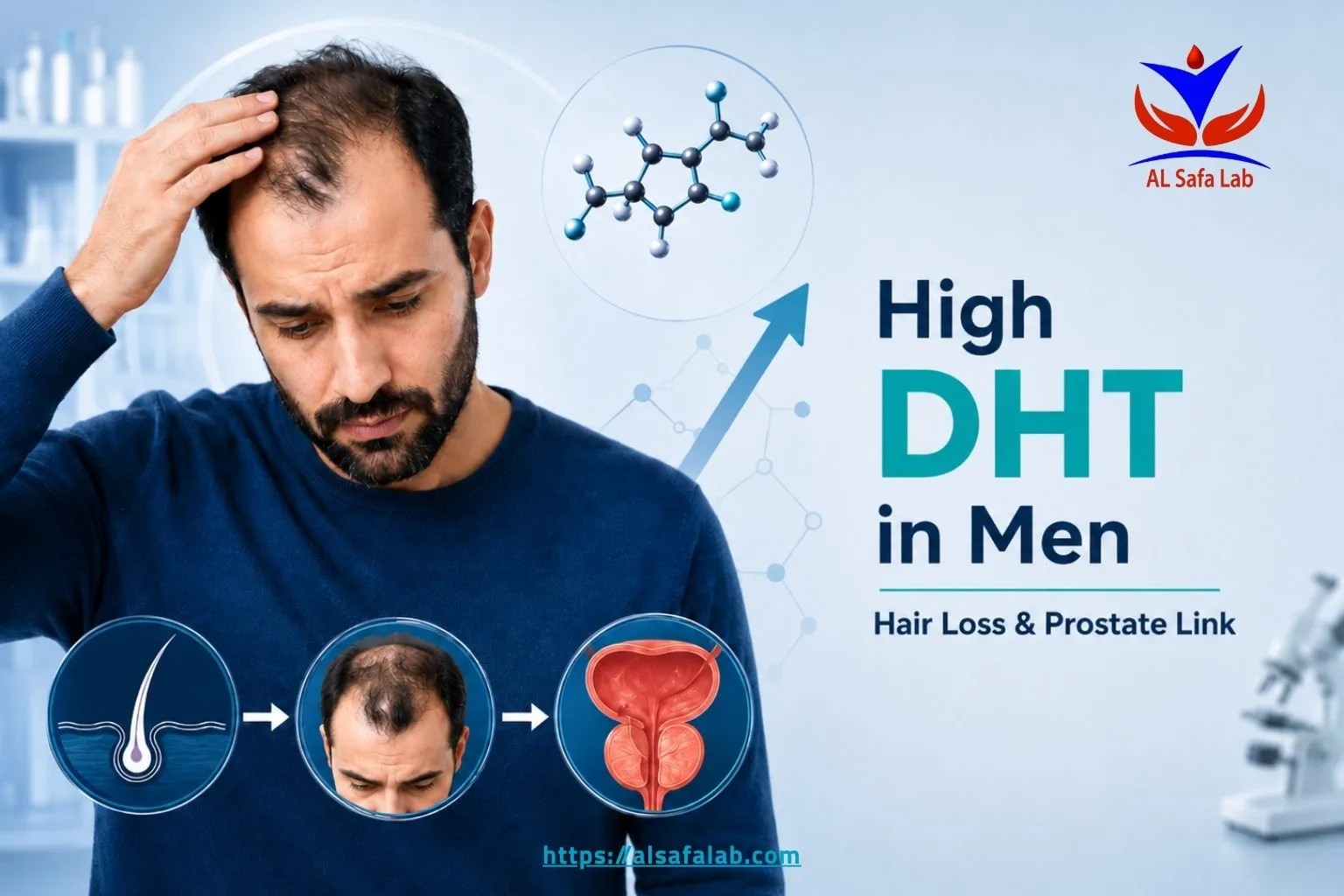
Causes of high DHT in men can explain more than just hair loss. When testosterone converts into dihydrotestosterone, DHT may affect the scalp, skin, and prostate—especially in men with genetic sensitivity. This can lead to a receding hairline, thinning hair, oily skin, adult acne, or prostate-related urinary symptoms. In this article, you’ll learn what raises DHT, how it affects hair and prostate health, and when a DHT blood test may help identify the real cause.
What Is DHT?
DHT stands for dihydrotestosterone, a powerful androgen hormone derived from testosterone. The body converts part of testosterone into DHT through the action of the enzyme 5-alpha reductase.
DHT is not harmful by itself. In fact, it has important roles in the male body, especially in the development of masculine characteristics and the growth of certain tissues.
The issue usually starts when DHT activity becomes excessive, or when specific tissues such as hair follicles, skin, or prostate tissue become more sensitive to it.
This is why symptoms alone are not enough to confirm high DHT. A proper medical evaluation and laboratory testing may be needed to understand the full hormonal picture.
Causes of High DHT in Men
The causes of high DHT in men vary from one person to another. In some cases, the issue is related to genetics, while in others it may involve enzyme activity, hormonal imbalance, aging, or the unsupervised use of hormonal products.
Here are the most common causes:
1. Increased 5-Alpha Reductase Activity
The enzyme 5-alpha reductase is responsible for converting testosterone into DHT. When this enzyme is highly active, the body may produce more DHT or show stronger DHT-related effects on the hair, skin, and prostate.
At first, this may not cause obvious symptoms. Over time, however, some men may begin to notice gradual hair thinning, a receding hairline, oily skin, or acne.
2. Genetics and Hair Follicle Sensitivity
In many cases, male pattern hair loss is not caused only by high DHT levels in the blood. The real issue may be that the hair follicles are genetically sensitive to DHT.
This explains why some men experience noticeable hair loss even when their hormone levels are not extremely high, while others may have normal or slightly elevated DHT levels without developing baldness.
In other words, the body’s response to DHT can be just as important as the DHT level itself.
3. Hormonal Imbalance
Any change in the balance of male hormones may affect androgen activity in the body. This includes changes in:
- Total testosterone.
- Free testosterone.
- SHBG, or sex hormone-binding globulin.
- Other hormones involved in androgen regulation.
For this reason, doctors may request more than one test alongside DHT, such as Total Testosterone, Free Testosterone, and SHBG, to get a clearer view of hormonal activity.
4. Aging and Prostate Changes
As men age, prostate tissue may become more responsive to androgen hormones. DHT plays an important role in prostate tissue growth, which is why it may be linked to some symptoms of benign prostate enlargement.
Symptoms such as difficulty starting urination, weak urine flow, interrupted urination, or frequent urination at night do not automatically mean that DHT is the only cause. However, they are important signs that require medical evaluation.
5. Glandular or Health-Related Disorders
Some glandular disorders may affect androgen production or hormone balance in the body. These changes can influence testosterone, DHT, and other related hormones.
In such cases, a DHT test alone may not be enough. A doctor may recommend a full hormonal panel and additional tests to assess the condition properly.
6. Using Testosterone or Anabolic Steroids Without Medical Supervision
Using testosterone, anabolic steroids, or hormone-related products for bodybuilding or performance enhancement without medical supervision may disturb natural hormone balance.
This may increase androgen activity and influence pathways related to DHT production. For this reason, hormonal products should never be used without consulting a qualified doctor.
Symptoms of High DHT in Men
Symptoms of increased DHT activity may appear in the hair, skin, or prostate. They can vary from one man to another, but the most common signs include:
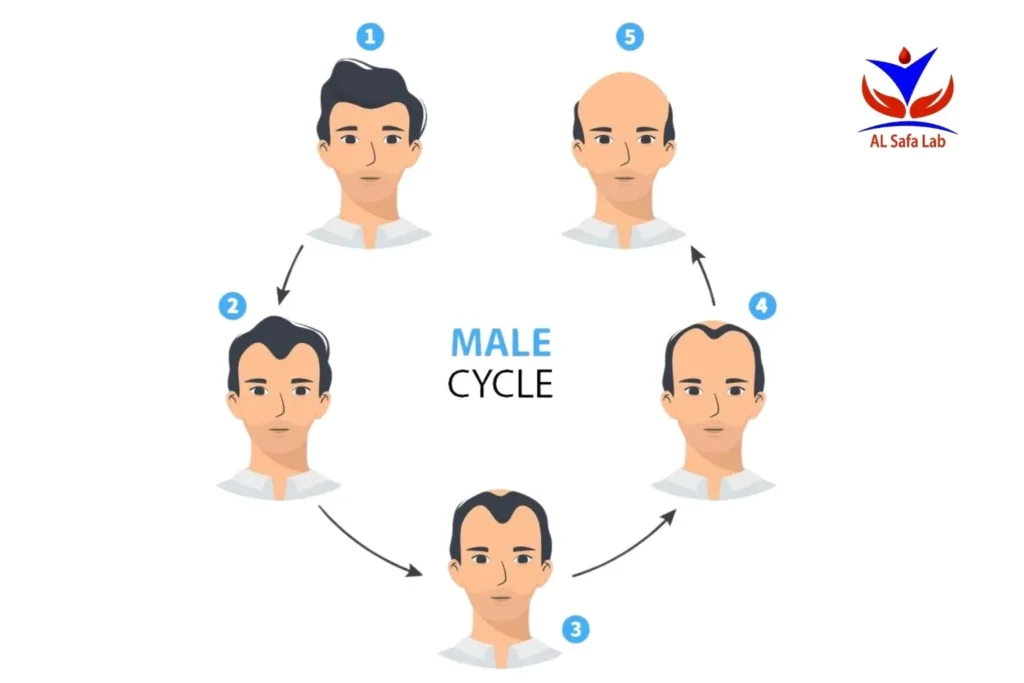
1. Receding Hairline
One of the most common signs linked to DHT activity is gradual hair loss at the front of the scalp. Men may notice the hairline moving backward or thinning around the temples.
This process usually happens slowly, and the hair becomes finer and weaker over time.
2. Thinning Hair on the Crown
Some men notice reduced hair density on the top or crown of the head, while hair on the sides and back remains relatively stronger.
This pattern is commonly seen in male pattern baldness.
3. Oily Skin
DHT may stimulate sebaceous glands in the skin, leading to increased oil production. This can cause shiny skin, oily scalp, and blocked pores.
4. Adult Acne
Acne that appears after adolescence, especially when combined with oily skin or breakouts on the back and shoulders, may be linked to increased androgen activity.
5. More Body Hair with Scalp Hair Loss
DHT may have different effects depending on the body area. In genetically sensitive men, it may weaken scalp hair follicles while supporting hair growth in areas such as the chest, back, or face.
This is why some men may experience scalp hair loss while noticing thicker body or facial hair.
6. Prostate-Related Urinary Symptoms
DHT may be associated with prostate tissue growth, which can sometimes be linked to urinary symptoms such as:
- Difficulty starting urination.
- Interrupted urine flow.
- Weak urine stream.
- Frequent urination, especially at night.
These symptoms do not confirm high DHT on their own, but they should not be ignored. A medical consultation and appropriate testing are recommended.
Does High DHT Cause Male Pattern Baldness?
Yes, DHT is strongly linked to male pattern baldness, but the relationship is not always as simple as having a high DHT level in the blood.
The key factor is often the sensitivity of hair follicles to DHT.
When DHT binds to receptors in genetically sensitive hair follicles, the follicles gradually shrink. As a result, the hair becomes thinner, shorter, and weaker with each growth cycle until visible thinning or baldness develops.
This process is known as hair follicle miniaturization, and it is one of the main mechanisms behind male pattern hair loss.
If you are experiencing gradual hair loss at the front or crown of your scalp, a DHT test, along with other hair and hormone-related tests, may help your doctor identify the most likely cause.
High DHT vs. DHT Sensitivity: What Is the Difference?
This is one of the most important points many men miss.
A man may have a normal DHT level in the blood, but his hair follicles may still be very sensitive to DHT due to genetic factors. In this case, hair loss can happen even if the test does not show a major elevation.
The opposite can also happen. A man may have relatively high DHT levels but no obvious baldness if his hair follicles are not genetically sensitive to it.
That is why doctors do not rely on a DHT test alone. They usually consider several factors, including:
- Hair loss pattern.
- Family history of baldness.
- Scalp examination.
- Hormonal test results.
- Vitamin and mineral levels.
- General health condition.
Does DHT Affect the Prostate?
Yes, DHT plays an important role in prostate tissue growth. Some medications that reduce DHT production are used under medical supervision to help manage benign prostate enlargement.
However, DHT should not be considered the only cause of prostate-related problems. Urinary symptoms may also be caused by inflammation, benign enlargement, infection, or other conditions that require medical assessment.
If you have ongoing urinary symptoms such as weak urine flow, interrupted urination, or frequent nighttime urination, it is better to consult a doctor. Your doctor may recommend prostate-related tests and hormonal evaluation depending on your case.
When Do You Need a DHT Test?
A DHT blood test may be recommended if you have symptoms that suggest increased androgen activity, especially if the symptoms are persistent or gradually worsening.
You may need to consider a DHT test if you have:
- Gradual hair loss with a male pattern.
- Receding hairline.
- Thinning hair on the crown.
- Persistent oily skin.
- Adult acne.
- Family history of male pattern baldness.
- Prostate-related urinary symptoms with medical recommendation.
- Need for hormonal evaluation during a hair loss treatment plan.
- Follow-up while using hormone-related treatment under medical supervision.
A DHT test does not diagnose every cause of hair loss by itself, but it can help your doctor understand an important part of your hormonal profile.
DHT Test for Men and Its Role in Hair Loss Diagnosis
Many men start using oils, supplements, shampoos, or hair growth products without knowing the real cause of their hair loss. This may waste time and delay proper treatment.
A DHT test can help in several ways:
1. Evaluating Hormonal Activity Related to Hair Loss
The test may help doctors understand whether androgen activity could be contributing to hair follicle weakening, especially in men with a family history of baldness.
2. Differentiating Hormonal Hair Loss from Other Causes
Not all hair loss is caused by DHT. Hair loss may also be related to:
- Iron deficiency.
- Zinc deficiency.
- Vitamin D deficiency.
- Thyroid disorders.
- Stress.
- Poor nutrition.
- Scalp conditions.
This is why a full evaluation is usually better than relying on one test only.
3. Monitoring Some Cases During Treatment
In some cases, doctors may request DHT or other hormonal tests to monitor the body’s response to treatment or adjust the medical plan.
Important Tests Related to Male Hormones and Hair Loss
To better understand the causes of high DHT in men, doctors may recommend a group of tests related to hair health and hormonal balance.
DHT – Dihydrotestosterone
This test measures the level of dihydrotestosterone in the blood. It may be useful when there are signs of androgen-related hair loss or hormonal imbalance.
Total Testosterone
This test measures the total amount of testosterone in the blood. Testosterone is the main hormone from which DHT is produced.
Free Testosterone
This test measures the active form of testosterone that is available for the body to use.
Read More: How to Increase Testosterone Levels Fast | Proven Methods
Ferritin
Ferritin measures iron stores. Low ferritin is one of the common causes of hair shedding and poor hair strength.
Zinc
Zinc supports hair, skin, immunity, and many metabolic processes. Low zinc levels may contribute to hair and skin problems.
SHBG
SHBG, or sex hormone-binding globulin, helps evaluate how much testosterone is bound and how much is available in active form.
Vitamin D
Low vitamin D may be linked to poor general health and may affect hair and immune balance.
TSH
TSH helps evaluate thyroid function. Thyroid disorders can cause hair thinning, shedding, and changes in hair texture.
Can You Lower DHT Naturally?
Healthy habits may support overall hormone balance, including:
- Getting enough sleep.
- Eating a balanced diet.
- Managing stress.
- Maintaining a healthy weight.
- Avoiding unsupervised hormonal products.
However, herbal products or supplements should not be used as a replacement for medical diagnosis. Some supplements promoted as “natural DHT blockers” may not be suitable for everyone and may interact with medications or medical conditions.
If you have visible hair loss or persistent symptoms, the safest step is to get the right tests and consult a doctor.
Does a DHT Test Require Fasting?
In most cases, a DHT test does not require fasting. However, instructions may vary depending on your health condition and the other tests requested at the same time.
If your doctor requests tests such as blood sugar or lipid profile alongside DHT, fasting may be needed.
It is always better to contact Al Safa Lab before the sample collection to confirm the preparation instructions.
How to Prepare for a DHT Test
Before taking a DHT test, it is recommended to:
- Tell your doctor or the lab about any medications or supplements you use.
- Do not stop any medication without medical advice.
- Follow the sample timing if your doctor recommends a specific time.
- Ask whether fasting is needed if you are taking other tests.
- Keep previous test results if available for comparison.
Book Your DHT Test with Al Safa Lab
If you are experiencing persistent hair loss, a receding hairline, oily skin, adult acne, or symptoms that may be related to male hormone activity, you can book your DHT test with Al Safa Lab.
At Al Safa Lab, we provide a smooth and reliable testing experience, including:
- Accurate sample collection and laboratory testing.
- Home visit service depending on your area coverage.
- Fast and easy result delivery.
- Complete privacy and confidentiality.
- Availability of related hormone and hair loss tests in the same visit.
- A support team to guide you through test instructions before sample collection.
Do not wait until hair loss becomes more advanced or symptoms become more difficult to manage.
Contact Al Safa Lab today to book your DHT test or ask about male hormone and hair loss test packages.
Frequently Asked Questions
What are the main causes of high DHT in men?
The main causes include increased 5-alpha reductase activity, genetic factors, hair follicle sensitivity to DHT, hormonal imbalance, aging-related prostate changes, and sometimes unsupervised use of testosterone or anabolic steroids.
How do I know if my DHT is high?
You cannot confirm high DHT from symptoms alone. Signs may include male pattern hair loss, receding hairline, oily skin, acne, increased body hair, or prostate-related urinary symptoms. Confirmation requires a DHT blood test and medical evaluation.
Why does testosterone convert into DHT?
Testosterone converts into DHT through the enzyme 5-alpha reductase. DHT has natural roles in male characteristics, body hair growth, skin activity, and prostate tissue growth.
Does zinc block DHT?
Zinc may support hormone balance and hair health, and some evidence suggests it may influence 5-alpha reductase activity. However, zinc is not a confirmed direct treatment for lowering DHT and should not replace medical diagnosis or treatment.
Can a DHT test detect the cause of hair loss?
A DHT test can help evaluate the hormonal factor related to hair loss, but it does not detect all causes. Hair loss may also be related to iron deficiency, zinc deficiency, vitamin D deficiency, thyroid problems, stress, nutrition, or scalp conditions.
Does a DHT test require fasting?
Usually, a DHT test does not require fasting. However, fasting may be required if other tests such as blood sugar or lipid profile are requested at the same time.
What is the relationship between DHT and the prostate?
DHT plays a role in prostate tissue growth and may be linked to benign prostate enlargement. However, prostate symptoms can have multiple causes and should be evaluated by a doctor.
Medical References
- Cleveland Clinic. DHT (Dihydrotestosterone): What It Is, Side Effects & Levels.
Available at: Cleveland Clinic Health Library. - NCBI Bookshelf – StatPearls. Physiology, Testosterone.
Available at: National Center for Biotechnology Information, NCBI Bookshelf. - NCBI Bookshelf – StatPearls. 5α-Reductase Inhibitors.
Available at: National Center for Biotechnology Information, NCBI Bookshelf.