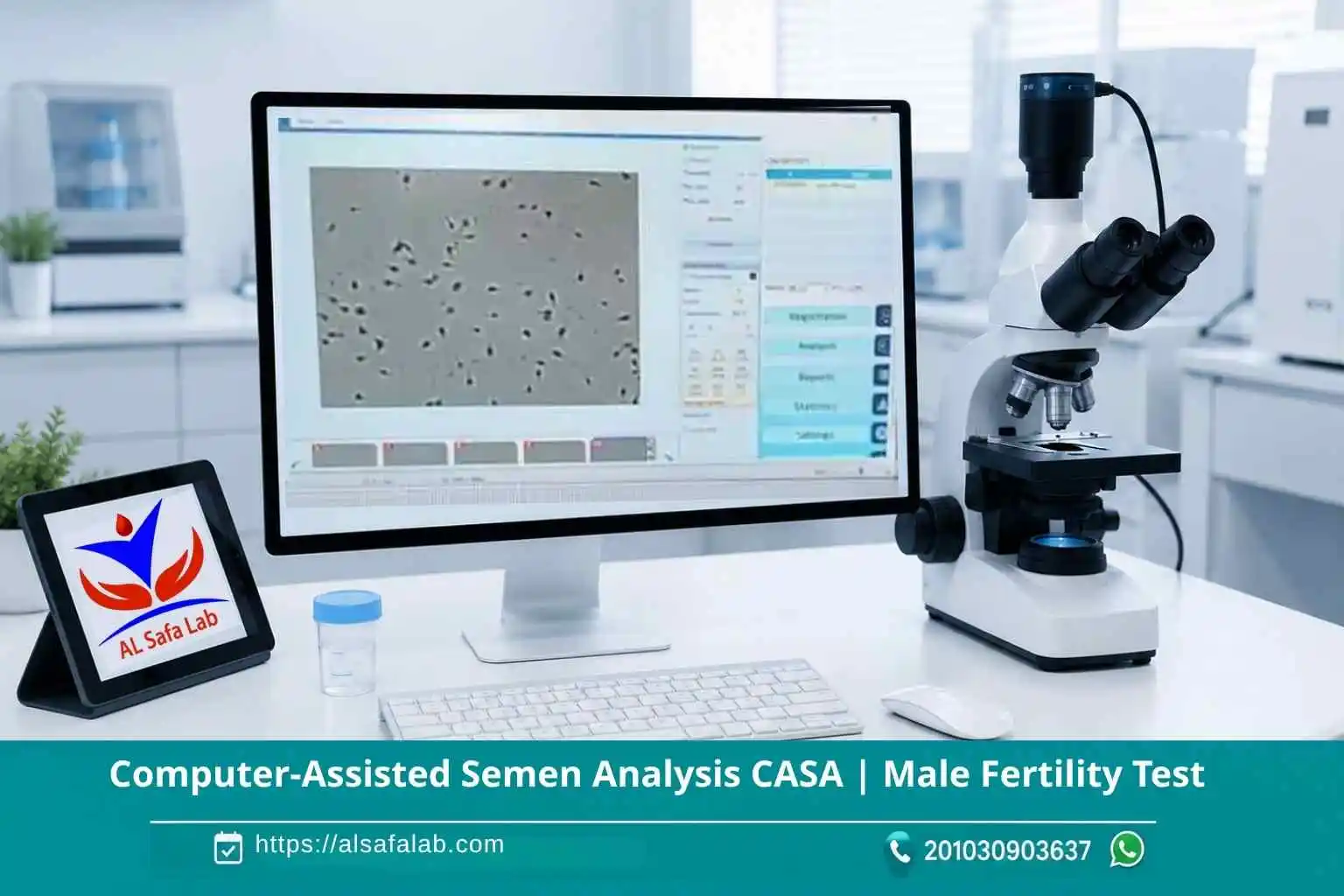
Computer-Assisted Semen Analysis CASA | Male Fertility Test
Computer-assisted semen analysis CASA is an advanced male fertility test that evaluates sperm count, motility, morphology, semen volume, viscosity, and pH using computerized imaging technology. If pregnancy is delayed or fertility treatment is being planned, this test can help doctors understand sperm quality more accurately and guide the next medical step. At Al Safa Lab, CASA semen analysis is performed with privacy, accuracy, and clear preparation instructions to support reliable same-day fertility evaluation whenever possible.
What Is Computer-Assisted Semen Analysis CASA?
Computer-assisted semen analysis, also known as CASA or Computer-Aided Semen Analysis, is an advanced laboratory method used to evaluate semen quality and male reproductive health.
Unlike traditional manual semen analysis, CASA uses computerized imaging systems to assess sperm movement, concentration, speed, direction, and other important indicators. This allows the laboratory to provide detailed and objective measurements that may support a more accurate fertility evaluation.
CASA does not replace medical consultation, but it gives doctors valuable information to help investigate delayed pregnancy, monitor treatment progress, and choose the most suitable next steps for each case.
What Does a Semen Analysis Test Measure?
A semen analysis test evaluates several important parameters that reflect semen quality and sperm health. These include:
- Sperm count: the total number of sperm cells in the sample.
- Sperm concentration: the number of sperm per milliliter of semen.
- Motility: the percentage of moving sperm.
- Progressive motility: the percentage of sperm moving forward effectively.
- Morphology: the percentage of sperm with normal shape.
- Volume: the total amount of semen produced.
- Viscosity: the thickness of the semen sample.
- pH level: the acidity or alkalinity of semen.
- Sperm vitality: the percentage of living sperm cells, when requested.
These measurements help doctors assess male fertility and decide whether further testing or treatment may be needed.
When Is CASA Semen Analysis Recommended?
Doctors may recommend a computer-assisted semen analysis in several situations, especially when a couple is experiencing delayed pregnancy or planning fertility treatment.
CASA semen analysis may be recommended for:
- Investigating delayed pregnancy despite regular intercourse.
- Evaluating male fertility before marriage or before planning pregnancy.
- Assessing sperm quality before assisted reproduction procedures such as IUI, IVF, or ICSI.
- Monitoring the condition after varicocele treatment or surgery.
- Following up after hormonal or fertility-related treatment.
- Checking the effect of certain medications or health conditions on fertility.
- Evaluating suspected male infertility or abnormal semen parameters.
- Supporting diagnosis in cases of sexual or hormonal disorders.
A single semen analysis result may not be enough to make a final judgment about fertility. In many cases, doctors may request a repeat test or additional investigations.
Normal Semen Analysis Values: What Do Results Mean?
- Normal semen analysis values may vary slightly between laboratories, testing methods, and medical guidelines. However, doctors usually evaluate several core indicators such as semen volume, sperm concentration, motility, morphology, pH, and liquefaction time. The WHO laboratory manual is one of the main international references used to standardize semen examination procedures.
- Normal semen analysis values may vary slightly depending on the laboratory method and reference guidelines used. In general, doctors evaluate semen volume, sperm concentration, motility, morphology, pH, and liquefaction time together rather than relying on one number only. An abnormal value does not always mean infertility, so results should be interpreted by a doctor within the full clinical context, and repeat testing may be recommended when needed.
- It is important to understand that an abnormal value does not always mean infertility. Semen analysis results should be interpreted by a doctor together with medical history, physical examination, the partner’s fertility status, and sometimes repeat testing.

Steps of Computer-Assisted Semen Analysis
To get accurate results, it is important to follow the laboratory instructions carefully before and during sample collection:
1. Abstinence Period Before the Test
Most laboratories recommend avoiding ejaculation for 2 to 7 days before the test, or according to the doctor’s instructions.
A shorter abstinence period may reduce sperm count, while a longer period may affect sperm motility. In many cases, 3 to 5 days of abstinence provides a more balanced and reliable sample.
2. How the Semen Sample Is Collected
The semen sample is usually collected by masturbation in a private room at the laboratory using a sterile container provided by the lab.
Important instructions include:
- Collect the entire sample.
- Use only the sterile container provided by the lab.
- Do not use regular condoms unless they are special medical collection condoms approved by the lab.
- Do not use ordinary lubricants, as they may affect sperm movement.
- Wash hands and the genital area before sample collection.
- Inform the lab if any part of the sample is lost.
3. Can the Sample Be Collected at Home?
In some cases, the sample may be collected at home if the laboratory allows it. However, the sample should be delivered to the lab within the recommended time and kept close to body temperature.
Because semen quality can be affected by time and temperature, collecting the sample at the lab is often preferred when possible.
4. When Will the Result Be Available?
The result of a CASA semen analysis may be available within a few hours, and in many cases, on the same day.
If additional tests are requested, such as sperm vitality testing, semen culture, antisperm antibodies, or sperm DNA fragmentation, results may take longer.
Benefits of Computer-Assisted Semen Analysis CASA
CASA semen analysis offers several advantages compared with traditional manual assessment.
Higher Diagnostic Accuracy
Computerized systems help reduce the possibility of human error and provide more objective measurements of sperm movement and activity.
Fast and Efficient Evaluation
CASA technology can analyze a large number of sperm cells within a short time, giving a detailed overview of semen quality.
Detailed Motility Assessment
The system can evaluate sperm speed, direction, and progressive movement, which are important indicators of sperm function.
Objective Comparison
Results can be assessed according to internationally recognized reference standards and interpreted by the doctor within the full clinical context.
Better Follow-Up
CASA can be useful for comparing results over time, especially before and after treatment, surgery, or lifestyle changes.
CASA Semen Analysis for Men
CASA semen analysis for men is an advanced fertility test that uses computer-assisted technology to measure sperm quality more precisely than basic visual assessment.
It can show sperm count, concentration, motility, speed, movement pattern, and progressive motility. This helps the doctor evaluate male fertility more clearly, especially in cases of delayed pregnancy or before assisted reproduction procedures.
However, CASA results should not be interpreted alone. They should be reviewed together with the full semen analysis report, medical history, physical examination, and the fertility status of both partners.
Difference Between Regular Semen Analysis and CASA
- Both regular semen analysis and CASA semen analysis can be useful in evaluating male fertility, but they are not exactly the same.
- A traditional semen analysis depends more on manual microscopic assessment by the laboratory specialist. It can evaluate important factors such as sperm count, motility, morphology, volume, pH, liquefaction, and general sample appearance.
- CASA uses computerized imaging and analysis to provide more detailed and measurable data, especially for sperm movement, speed, and motility patterns.
Is CASA Better Than Regular Semen Analysis?
- CASA is not always a complete replacement for manual semen analysis. Each method has its role.
- Manual assessment can help evaluate certain sample characteristics that may require direct expert observation, while CASA provides high-speed, objective, and quantitative measurements.
- In some cases, combining both methods may give the doctor a clearer picture, especially when results are borderline, unclear, or affected by complex fertility factors.
How to Prepare for a Male Fertility Test
To improve the accuracy of semen analysis results, Al Safa Lab recommends following these instructions:
- Avoid ejaculation for 3 to 5 days before the test, unless your doctor gives different instructions.
- Do not take fertility supplements, hormonal medications, or sexual performance medications without telling your doctor.
- Avoid smoking and alcohol for several days before the test when possible.
- Inform the laboratory about any fever, infection, recent illness, or medication use.
- Tell the lab if you have had previous reproductive surgery, varicocele, or hormonal disorders.
- Follow the sample collection instructions carefully.
- Deliver the sample on time if it is collected at home.
Proper preparation is essential because sample collection errors can directly affect the accuracy of the result.
Book Your CASA Semen Analysis at Al Safa Lab
If you are experiencing delayed pregnancy, preparing for fertility treatment, or want a clearer evaluation of male reproductive health, computer-assisted semen analysis can be an important first step.
At Al Safa Lab, we provide CASA semen analysis with accurate sample handling, privacy, clear preparation instructions, and reliable reporting to help your doctor assess the next step.
Book your CASA semen analysis today and take a confident step toward understanding your fertility health.
Semen Analysis Price
The price of computer-assisted semen analysis may vary depending on the laboratory, city, testing technology, and whether additional tests are included.
A basic semen analysis is usually less expensive than a full male fertility evaluation that includes hormone testing such as FSH, LH, testosterone, prolactin, or advanced tests such as sperm DNA fragmentation.
For an accurate price, it is best to contact Al Safa Lab customer service directly and ask about the available male fertility tests and packages.
The most important factor is not only the price, but also choosing a reliable laboratory that follows correct sample handling and testing standards, because result accuracy can directly affect diagnosis and treatment decisions.
Male Fertility Testing at Al Safa Lab
Al Safa Lab provides advanced male fertility testing, including computer-assisted semen analysis CASA, using modern laboratory technology and quality-controlled procedures.
The lab also offers specialized packages related to men’s health, hormones, fertility, and reproductive evaluation.
If you are experiencing delayed pregnancy, have a history of varicocele, or want to assess your fertility before treatment, a semen analysis can be an important first step.
Why Choose Al Safa Lab for Semen Analysis and Male Fertility Testing?
Al Safa Lab provides a reliable and private testing experience for men who need accurate fertility assessment.
Reasons to choose Al Safa Lab include:
- Computer-assisted semen analysis using advanced CASA technology.
- Accurate and reliable laboratory results.
- Private and confidential sample handling.
- Same-day result availability in many cases.
- Specialized tests for male fertility and hormonal health.
- Home visit service for selected tests, depending on test type and area coverage.
- Licensed laboratory services according to applicable health regulations.
- A support team to explain preparation instructions before testing.
For booking or inquiries:
Unified number: 201030903637
Email: contact@alsafalab.com
You can also contact Al Safa Lab directly via WhatsApp.
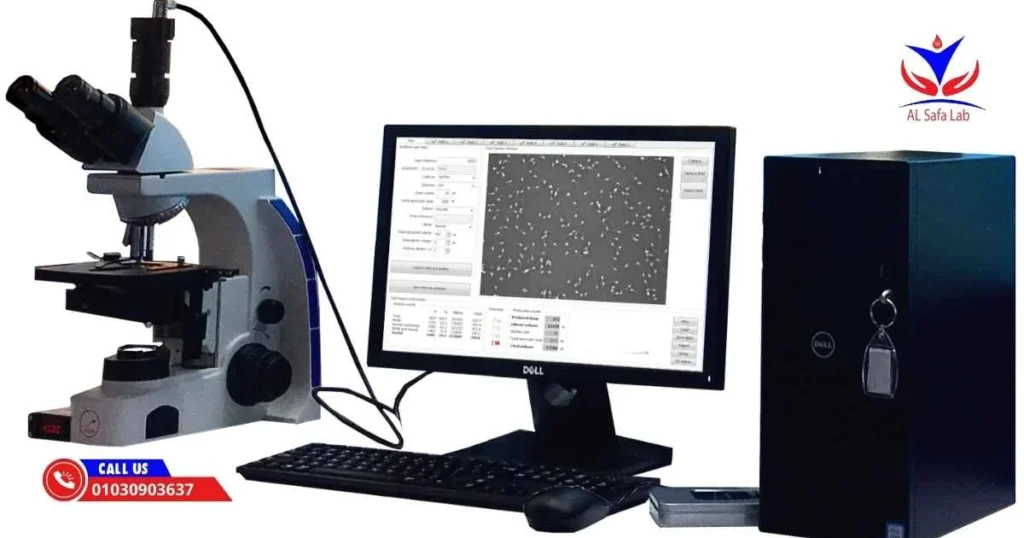
Benefits of CASA Semen Analysis
CASA semen analysis provides a detailed evaluation of important semen and sperm indicators, including:
| Parameter | What It Measures |
| Sperm count | The total number of sperm cells in the sample. |
| Semen volume | The total amount of semen in milliliters. |
| Morphology | The percentage of sperm with normal shape. |
| Motility | The percentage and speed of moving sperm. |
| Progressive motility | The percentage of sperm moving forward effectively. |
| pH level | The acid-base balance of semen, which may indicate infection or gland-related issues. |
| Concentration | The number of sperm cells per milliliter of semen. |
| Vitality | The percentage of living sperm cells in the sample, when requested. |
| Viscosity | The thickness of semen, which may affect sperm movement. |
Discover more insights in our related health guide:
Sex hormone binding globulin (SHBG) test
How to Increase Testosterone Levels Fast | Proven Methods
Causes of Low Testosterone | Symptoms & When to Test
Common Semen Analysis Mistakes That May Affect
Results
Some mistakes may lead to inaccurate semen analysis results. The most common include:
- Not following the recommended abstinence period before the test.
- Losing part of the sample during collection.
- Using regular condoms or lubricants.
- Delaying sample delivery to the laboratory.
- Exposing the sample to heat or cold.
- Collecting the sample during fever, infection, severe stress, or illness.
- Taking medications or supplements without informing the doctor or laboratory.
If the result is abnormal, doctors often recommend repeating the test after a suitable interval, because male fertility assessment should not usually depend on one semen analysis result only.
Related Tests That May Be Recommended
Depending on the semen analysis result and medical history, the doctor may recommend additional tests, such as:
- FSH.
- LH.
- Total Testosterone.
- Prolactin.
- TSH.
- Semen culture.
- Sperm vitality test.
- Sperm DNA fragmentation test.
- Scrotal ultrasound, when clinically needed.
These tests can help identify hormonal, infectious, structural, or genetic factors that may affect male fertility.
Frequently Asked Questions
What is computer-assisted semen analysis CASA?
Computer-assisted semen analysis, or CASA, is an advanced semen test that uses computerized imaging technology to evaluate sperm count, motility, speed, movement pattern, morphology, volume, viscosity, and other semen parameters.
Is CASA semen analysis more accurate than regular semen analysis?
CASA provides more objective and detailed measurements, especially for sperm motility and movement patterns. However, it does not always replace manual evaluation, and the doctor may use both methods depending on the case.
When should a man do a semen analysis test?
A semen analysis may be recommended when pregnancy is delayed, before assisted reproduction treatment, after varicocele surgery, during fertility treatment follow-up, or when a man wants to check his reproductive health.
How many days should I abstain before semen analysis?
Most laboratories recommend avoiding ejaculation for 2 to 7 days before the test. In many cases, 3 to 5 days is preferred for more reliable results.
Can I collect the semen sample at home?
In some cases, yes, but the sample must be delivered to the laboratory quickly and kept close to body temperature. Always follow the laboratory’s sample collection instructions.
Does semen analysis show male infertility?
Semen analysis helps evaluate sperm quality and may identify possible fertility problems, but it does not diagnose all causes of male infertility alone. Results should be reviewed by a doctor with other clinical information.
When will the CASA semen analysis result be available?
In many cases, results may be available on the same day. Additional tests such as culture, vitality testing, or DNA fragmentation may require more time.