How Can I Lower DHT Hormone? Natural and Medical Methods
How can I lower DHT hormone, and can it be reduced naturally, or does it require medical treatment? Elevated DHT is one of the most common factors associated with hair loss. It may also be linked to oily skin, acne, and benign prostate enlargement. In this article, we will discuss the most important ways to lower dihydrotestosterone (DHT), as well as its normal range in the body.
What Is Dihydrotestosterone (DHT)?
DHT is an androgen hormone produced when testosterone is converted by an enzyme called 5-alpha reductase.
This hormone plays an important role in the development of male characteristics, body hair growth, and prostate health.
However, problems may occur when DHT levels rise above the normal range, as this can affect certain organs and body functions.
Does High DHT Cause Hair Loss?
Yes, hair loss may occur due to elevated DHT levels. However, hair loss can also result from iron deficiency, thyroid disorders, vitamin D deficiency, stress, anemia, poor nutrition, or certain medications.
Therefore, the exact cause cannot be determined accurately without proper testing, including a DHT test when clinically indicated, so that the doctor can prescribe the most suitable treatment after proper diagnosis through the appropriate laboratory investigations.
How Do I Know If My DHT Level Is High?
High DHT levels or increased sensitivity to DHT may be suspected when some of the following signs appear:
- Gradual recession of the frontal hairline.
- Thinning hair at the top of the scalp or crown area.
- Persistent hair loss, with new hair appearing weaker and shorter.
- Increased scalp oiliness or acne.
- Increased body hair with reduced scalp hair density.
- Prostate-related symptoms, such as frequent urination or weak urine flow, especially with age.
However, high DHT cannot be confirmed based on symptoms alone, because the same symptoms may occur due to other causes. Therefore, accurate diagnosis starts with laboratory tests and medical evaluation.
Check your health now with: the Men’s Hormone Test Package from Al Safa Lab
How Can I Lower DHT Naturally?
Some lifestyle habits may help support hormonal balance and reduce the effect of DHT on hair. However, they do not replace medical consultation if hair loss is severe or persistent. These habits include:
1. Improving Your Diet
Following a balanced diet helps support hair health and hormonal balance. Focus on foods rich in zinc, vitamin D, protein, iron, and healthy fatty acids.
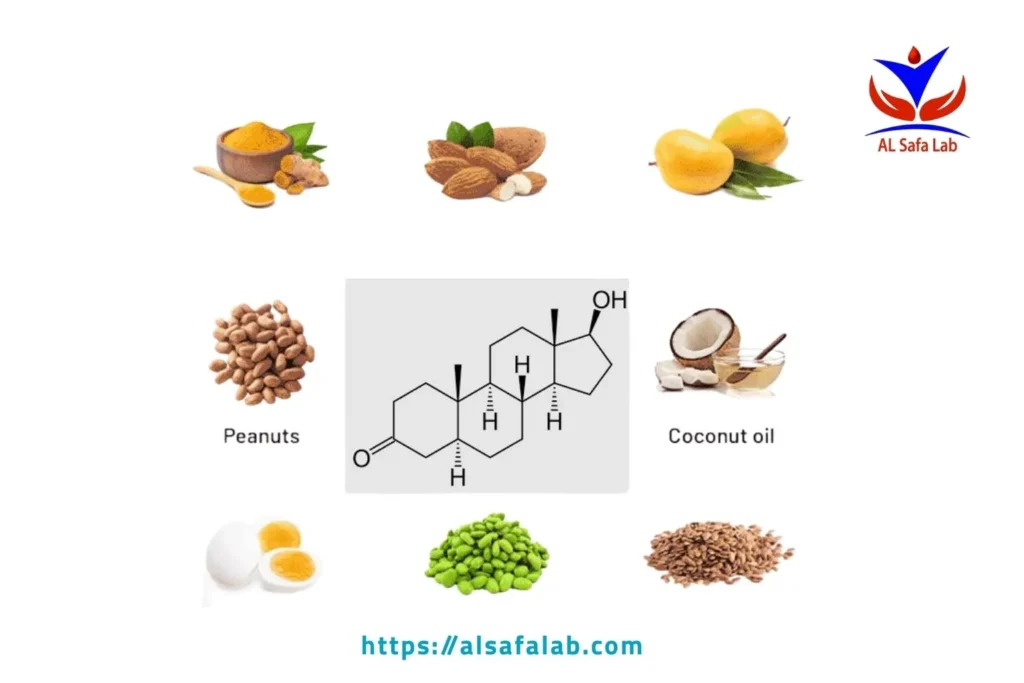
Foods that may help support DHT balance include:
- Pumpkin seeds.
- Nuts such as almonds and walnuts.
- Fatty fish.
- Eggs.
- Leafy green vegetables.
- Cooked tomatoes.
- Green tea.
- Legumes.
These foods do not stop DHT directly like medications, but they may help support hair follicles and reduce nutritional factors that contribute to hair weakness.
2. Treating Vitamin and Mineral Deficiencies
Deficiency in certain nutrients may worsen hair loss or make hair follicles more vulnerable to hormonal effects. Therefore, it is important to check vitamin D, iron, ferritin, zinc, and vitamin B12 levels if hair loss is persistent.
3. Reducing Stress and Improving Sleep
Chronic stress and poor sleep may affect hormone balance and hair growth quality. Try to sleep for 7 to 8 hours daily, and practice activities that help reduce stress, such as walking, deep breathing, or moderate exercise.
4. Avoiding Unverified Hormonal Supplements and Steroids
Some muscle-building supplements or hormonal steroids may increase androgen levels and worsen hair loss in people genetically predisposed to male-pattern baldness. Therefore, do not use any hormonal supplement without medical supervision.
How Can I Stop DHT?
It is not recommended to try to completely stop DHT in men, because the body needs it for important functions.
The better approach is to reduce the excessive effect of DHT or control its production when it causes a clear problem, such as androgenetic alopecia or benign prostate enlargement.
Methods for controlling DHT may include:
- Improving nutrition and correcting nutritional deficiencies.
- Using topical hair treatments prescribed by a doctor.
- Using 5-alpha reductase inhibitor medications in some cases, such as finasteride or dutasteride, but only under medical supervision.
- Monitoring laboratory results to assess hormone levels and other factors related to hair loss.
Using DHT-lowering medications without medical advice may cause side effects. Therefore, you should not start any medication before testing, medical evaluation, and consulting your treating physician.
Read More: DHT Benefits for Men and Its Role in Male Characteristics
What Vitamin Stops DHT?
There is no single vitamin that directly and reliably “stops” DHT. However, some vitamins and minerals help support hair health and hormonal balance, especially when there is a clear deficiency in the body.
The most important nutrients related to hair health include:
- Vitamin D.
- Zinc.
- Iron and ferritin.
- Vitamin B12.
- Biotin.
- Selenium.
For example, vitamin D is important for hair follicle health, and deficiency may be associated with increased hair loss in some cases. However, it is not considered a direct treatment for stopping DHT. Therefore, the best approach is to perform the necessary tests first, then correct any deficiencies according to the results and the doctor’s guidance.
Does Zinc Inhibit DHT?
Zinc is an important mineral for hair health, prostate health, and hormonal balance. Some studies suggest that zinc may affect the activity of the 5-alpha reductase enzyme involved in DHT production. However, its effect depends on the dose and the person’s health condition, and it should not be considered a standalone treatment for lowering DHT.
If you have zinc deficiency, correcting it may help improve hair health. However, taking high doses without testing or medical supervision may cause other health problems. Therefore, it is better to check zinc levels or have your condition assessed by a doctor before using supplements.
When Do You Need DHT-Lowering Medications?
DHT-lowering medications may be needed in cases of clear androgenetic alopecia or benign prostate enlargement. A doctor may prescribe medications that help reduce DHT by inhibiting the 5-alpha reductase enzyme.
The most well-known DHT-lowering medications include:
- Finasteride.
- Dutasteride.
These medications may be effective in some cases, but they are not suitable for everyone and may have side effects. Therefore, they should not be used without a clear diagnosis and medical follow-up.
When Should You Book a DHT and Hair Loss Test Package?
It is recommended to book a hair loss test package or a hormone test package if you notice:
- Persistent hair loss for more than 3 months.
- Visible gaps in the frontal hairline or crown area.
- A family history of androgenetic alopecia.
- Severe scalp oiliness with hair loss.
- Reduced hair density despite using topical hair products.
- Prostate-related symptoms such as frequent urination or weak urine flow.
- Previous use of sports supplements or hormonal products.
Why Choose Al Safa Lab for Hormone Testing?
At Al Safa Medical Laboratory, we provide accurate tests that help evaluate hormones and other factors related to hair loss, with the option of home sample collection for your comfort and convenience.
Through the hair loss and hormone test package, you can identify the key indicators that help your doctor determine the cause, whether it is related to DHT, vitamin deficiency, thyroid disorders, anemia, or testosterone imbalance.
Tips to Maintain DHT Balance and Hair Health
- Do not use DHT-lowering medications without a prescription.
- Do not rely only on hair products if the cause of hair loss is internal.
- Check vitamin D, iron, and thyroid function if hair loss is persistent.
- Avoid hormonal steroids and unverified gym supplements.
- Pay attention to protein intake, sleep, and stress reduction.
- Review your test results with a dermatologist or andrologist according to your symptoms.
Frequently Asked Questions
What Are the Causes of Increased DHT in Men?
DHT levels may increase in men due to higher available testosterone that can be converted into DHT, increased activity of the 5-alpha reductase enzyme, genetic predisposition, the use of hormonal steroids or some bodybuilding supplements, and sometimes certain hormonal disorders.
Can DHT Be Stopped Naturally in Men?
DHT cannot and should not be completely stopped naturally, as it is an important hormone in the body. However, its balance and effect may be supported by avoiding steroids, improving sleep, reducing stress, correcting vitamin and mineral deficiencies, and following a healthy diet.
Can DHT Be Stopped in Women?
It is not recommended to completely stop DHT in women, because androgens are naturally present in small amounts and have important functions. However, if symptoms such as female-pattern hair loss, severe acne, or excessive hair growth appear, hormone evaluation is recommended to check for causes such as polycystic ovary syndrome or other endocrine disorders.
Does Menstruation Increase DHT?
Hormone levels may change during menstruation, including female hormones and androgens. However, the menstrual cycle is not considered a direct cause of abnormally high DHT levels. If symptoms such as hair loss or excessive body hair appear, the cause may be a hormonal disorder such as polycystic ovary syndrome or androgen excess, and appropriate testing is recommended.
What Pills Stop DHT?
The most common medications that reduce DHT are finasteride and dutasteride. They are 5-alpha reductase inhibitors and may be used in some cases of androgenetic alopecia or benign prostate enlargement. They should only be taken with a doctor’s prescription due to the possibility of side effects.
What Is the Normal DHT Level?
The normal DHT range varies according to age, sex, and the testing method used by each laboratory. In general, normal DHT levels in adult men are usually between 30 and 85 ng/dL, while in adult women they are usually less than 30 ng/dL.
References