
Trichomoniasis | Symptoms, Causes & Treatment
Trichomoniasis is one of the most common sexually transmitted parasitic infections, caused by a single-celled parasite known as Trichomonas vaginalis. Both men and women can be affected, yet many cases present no noticeable symptoms, allowing the infection to spread unknowingly.
Recognizing the symptoms, understanding how trichomoniasis is transmitted, and knowing when to get tested are crucial steps to detecting the infection early and receiving timely treatment, thereby preventing potential complications.
What is Trichomoniasis?
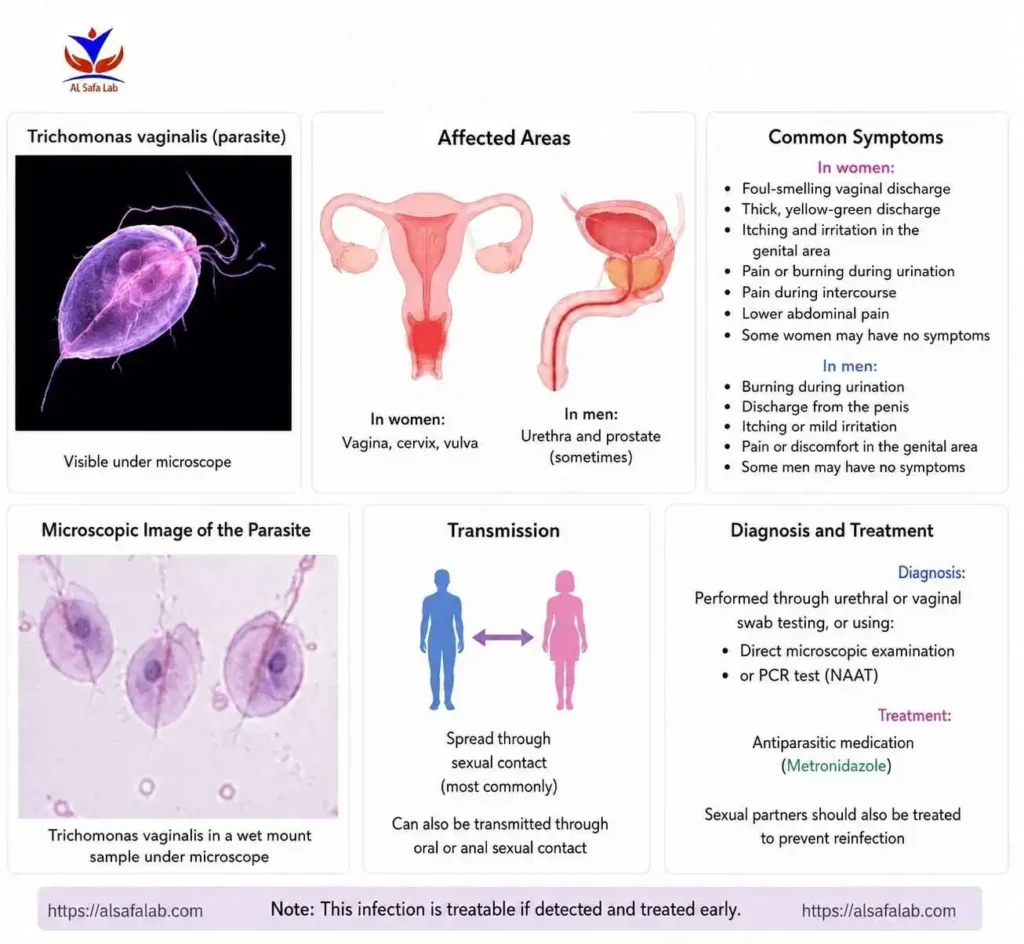
Trichomoniasis is a sexually transmitted infection caused by the microscopic parasite Trichomonas vaginalis. The infection primarily targets the reproductive system:
- In women: the vagina and cervix
- In men and women: the urethra
Symptoms vary from person to person. While some individuals experience clear signs of infection, many remain asymptomatic, yet they can still transmit the infection to sexual partners.
Causes of Trichomoniasis in Men and Women
The primary cause of trichomoniasis is exposure to Trichomonas vaginalis during sexual contact with an infected partner. Certain factors increase the risk of infection:
- Engaging in unprotected sexual activity
- Having a partner diagnosed with the infection
- Previous trichomoniasis infection without treating the partner, which may lead to reinfection
Importantly, trichomoniasis is not linked to poor personal hygiene, and the absence of symptoms does not imply the absence of infection.
How is Trichomoniasis Transmitted?
Trichomoniasis is mainly spread through:
- Sexual contact with an infected individual
- Exchange of genital secretions during sexual activity
Transmission can occur even if the infected partner shows no symptoms, highlighting the importance of testing in certain situations.
Can Trichomoniasis Be Transmitted via Toilet Seats?
No, trichomoniasis is not typically transmitted through toilet seats or shared bathroom surfaces, as the parasite requires the specific environment of the reproductive tract to survive. Sharing towels or bathroom facilities is not a common route for spreading the infection.
Symptoms of Trichomoniasis
Symptoms differ between men and women, and many infected individuals may remain asymptomatic.
Symptoms in Women
- Unusual vaginal discharge
- Changes in the color or odor of secretions
- Vaginal itching or irritation
- Discomfort or pain during sexual intercourse
- Pain or burning during urination
- Pelvic discomfort
Symptoms in Men
- Burning sensation during urination
- Discharge from the penis
- Irritation or discomfort in the urethra
- Pain or discomfort in the genital area
Many men show no obvious symptoms, making testing important when exposure is suspected.
Symptoms in Teenage Girls or Young Women
- Abnormal vaginal discharge
- Vaginal itching or redness
- Burning sensation during urination
- Pain during sexual activity
- Changes in vaginal odor
These symptoms are not exclusively indicative of trichomoniasis, as they may overlap with other infections, making laboratory testing essential for an accurate diagnosis.
You may be interested: Trichomonas Vaginalis PCR Test: Symptoms & Accuracy
Can Trichomoniasis Occur Without Symptoms?
Yes, the infection can occur silently, which is a significant factor in its continued spread. Lack of symptoms does not mean absence of infection. Testing is recommended if:
- A partner has been diagnosed with trichomoniasis
- There has been unprotected sexual exposure
- Unusual genital symptoms appear
- A comprehensive STI screening is desired
Is Trichomoniasis Dangerous?
While treatable, untreated trichomoniasis may lead to:
- Persistent symptoms and discomfort
- Transmission to sexual partners
- Increased susceptibility to other sexually transmitted infections (STIs)
- Potential complications during pregnancy in some cases
Early diagnosis reduces these risks and helps maintain reproductive and sexual health.
Complications of Trichomoniasis
In women:
- Persistent vaginal inflammation and discomfort
- Increased risk of pregnancy-related complications in certain cases
In men:
- Persistent urethral inflammation
- Potential transmission to sexual partners
Presence of any STI warrants careful monitoring of sexual health, particularly in individuals at risk.
Treatment of Trichomoniasis
Trichomoniasis is treated with antiparasitic medications prescribed by a healthcare professional. Key steps include:
- Following the prescribed dosage and duration exactly
- Treating sexual partners when necessary to prevent reinfection
- Avoiding sexual activity until treatment is complete
- Attending follow-up appointments if recommended by a doctor
Does Flagyl Treat Trichomoniasis?
Yes, Flagyl (Metronidazole) is commonly used to treat trichomoniasis. Proper use under medical supervision ensures effectiveness, as dosage and treatment duration depend on the individual case. Some symptoms may be caused by other infections, so a professional assessment is essential.
How to Prevent Trichomoniasis
Prevention strategies include:
- Regular STI testing when exposure risk exists
- Using protective measures during sexual activity
- Treating both partners when an infection is diagnosed
- Avoiding sexual contact until treatment is complete
When Should You Get Tested for Trichomoniasis?
Testing is recommended if:
- Unusual genital symptoms appear
- Your partner has been diagnosed with trichomoniasis
- There has been unprotected sexual contact
- Recurrent genital infections occur
- You wish to undergo comprehensive STI screening
Symptoms alone are not always sufficient to confirm infection.
Trichomoniasis Testing in Cairo
If you suspect trichomoniasis, testing at a specialized laboratory like Al Safa Lab ensures accurate results with full confidentiality.
Testing options include STI Plus Packages, with home sample collection available for convenience and privacy.
Contact the lab via WhatsApp to schedule your appointment.
Frequently Asked Questions (FAQ)
Can trichomoniasis be cured?
Yes, trichomoniasis can be cured in most cases when diagnosed accurately, treated according to a physician’s instructions, and followed up with appropriate testing.
Does trichomoniasis cause body odor?
Yes, it can cause an unpleasant odor, sometimes described as fishy, particularly in women, due to vaginal secretions resulting from the infection.
How can I know if I have trichomoniasis?
Trichomoniasis can be detected through testing or laboratory analysis, especially if symptoms such as itching, irritation, discomfort during sex, or burning during urination appear.
References
Related Topics: