STD Panel PCR Urine Test | Fast, Accurate Screening
Most sexually transmitted infections show no symptoms in their early stages, making them easy to spread unknowingly. A STD panel PCR urine test solves this by detecting the genetic material of common pathogens directly in a urine sample, often weeks before symptoms appear, with no swab or invasive procedure.
This guide explains exactly what an STD PCR urine panel covers, how accurate it is, what it can and cannot detect, and why combining it with a blood-based HIV PCR test gives you the most complete picture of your sexual health.
What Is a STD Panel PCR Urine Test?
PCR (Polymerase Chain Reaction) is a molecular technique that amplifies tiny fragments of a pathogen’s DNA or RNA until detectable, even at extremely low concentrations. This makes PCR far more sensitive than older methods like culture or microscopy, and it’s why PCR has become the gold-standard technology for STI screening worldwide.
Applied to a urine sample, it’s called “Urine PCR” — the preferred method for most patients because it is:
- Completely non-invasive and pain-free
- Free of any genital swabbing
- Easy to collect privately at home or at the lab
- Requires no fasting or special preparation
What Does the Urine PCR Panel Detect?
A comprehensive STD urine PCR panel is designed to identify the DNA or RNA of the bacteria and parasites most commonly responsible for genital and urinary tract infections. A well-designed panel typically screens for:
- Neisseria gonorrhoeae (Gonorrhea): n gonorrhoeae PCR searches for the bacterium’s genetic material directly, and is considered one of the most reliable methods for detecting gonorrhea, particularly in men, who often show no symptoms at all in early infection.
- Trichomonas vaginalis (Trichomoniasis): A common parasitic infection frequently missed by older microscopy-based methods, but picked up reliably by molecular PCR testing.
- Mycoplasma genitalium: An increasingly recognized cause of persistent or recurrent urethritis that often goes undiagnosed because it isn’t part of standard STI panels, yet PCR is currently the only clinically practical way to detect it.
- Ureaplasma parvum: One of two Ureaplasma species capable of causing urethritis and reproductive tract infections. Clinical studies from major reference laboratories show that real-time PCR detects Ureaplasma species with high sensitivity, and can even distinguish Ureaplasma parvum from Ureaplasma urealyticum, which traditional culture struggles to do.
- Sensitivity for these pathogens via Ureaplasma Parvum PCR is generally strong, though it can vary by organism, patient sex, and collection technique. This is exactly why a multi-pathogen panel, rather than one isolated test, gives a far more dependable picture of sexual health.
What a Urine Sample Cannot Tell You: The Case for Adding HIV PCR
Here’s a critical point anyone considering STD testing needs to understand: urine PCR is excellent at detecting local genital and urinary pathogens, but it cannot detect bloodborne viral infections such as HIV. That requires a separate blood-based test.
This is exactly where an HIV PCR (RNA) blood test becomes essential. Unlike a standard antibody test, which relies on your immune system producing detectable antibodies, HIV PCR detects the virus’s genetic material directly in the bloodstream:
- A standard antibody test typically can’t reliably detect HIV until 18 to 90 days after exposure, since the body needs time to produce antibodies.
- An HIV PCR (RNA) test can detect the virus as early as 9 to 11 days after exposure, because it looks for the virus itself rather than an immune response.
This makes HIV PCR the most useful tool for anyone with a recent potential exposure who wants an early, reliable answer instead of waiting months in uncertainty. Medical guidelines still recommend a confirmatory antibody test later for complete certainty, but PCR closes the most stressful part of the wait dramatically.
Learn More About: STD Plus Package (Advanced Sexual Health Screening)
Why an Integrated Panel Beats Single Tests
Combining the urine PCR panel (gonorrhea, trichomoniasis, Mycoplasma genitalium, Ureaplasma parvum) with an HIV PCR blood test closes two very different diagnostic gaps in a single visit: local genital pathogens captured through urine, and a bloodborne virus that requires direct detection in blood.
Testing for only one group leaves a blind spot. Someone could test negative on a urine panel and still be living with an undiagnosed HIV infection, or vice versa.
Who Should Get Tested?
According to the World Health Organization, more than one million new curable STIs are acquired daily among people aged 15 to 49 worldwide, equating to over 376 million new infections every year from just four pathogens. This makes clear that STIs are a widespread public health reality, not a rare concern, and many people carrying an infection have no idea.
Consider testing if you:
- Have had a new sexual partner or multiple partners recently
- Notice unexplained symptoms such as burning during urination or abnormal discharge
- Want certainty before marriage or family planning
- Prefer routine, proactive screening even without symptoms
- Had a recent potential exposure and want an early answer through HIV PCR
Routine testing isn’t a sign something is wrong, it’s a responsible habit that protects you and your partners with an evidence-based answer instead of guesswork.
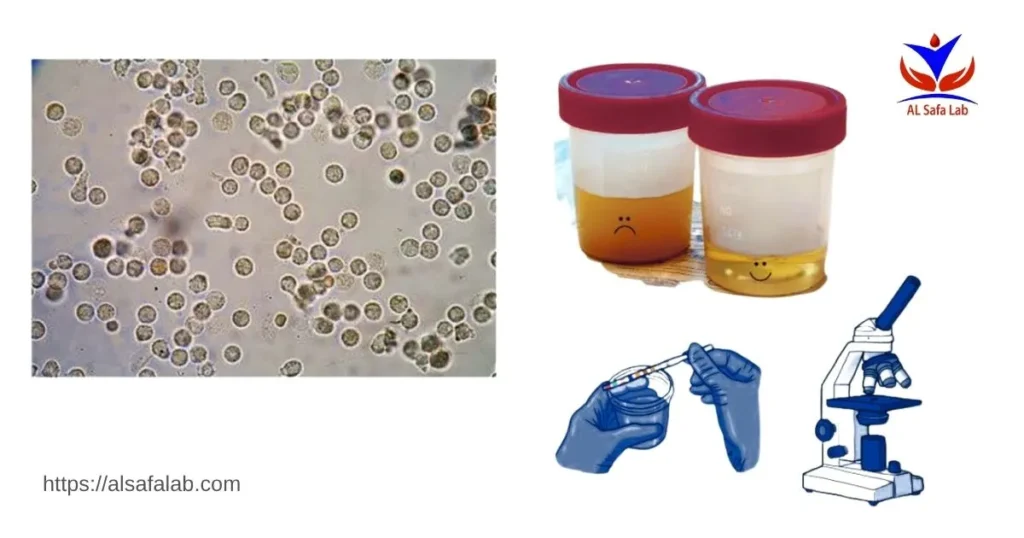
The STD Plus PCR Panel at Al Safa Lab
To close exactly this diagnostic gap, Al Safa Lab offers a combined screening option pairing the urine PCR panel with the HIV PCR blood test, giving you both layers of protection in one visit. The panel includes:
- Ureaplasma parvum PCR
- Neisseria gonorrhoeae PCR
- Mycoplasma genitalium PCR
- Trichomonas vaginalis PCR
- HIV PCR test
No fasting or special preparation is required. Results are delivered with complete confidentiality via WhatsApp or email, with no data shared under any circumstances.
Book Your Test Today
Don’t leave your sexual health to guesswork. The STD Plus Package from Al Safa Lab combines molecular urine testing with early HIV detection in one fast, confidential visit.
📞 Book your appointment now via WhatsApp
Your peace of mind shouldn’t have to wait.
This article is for educational purposes only and does not replace professional medical advice. If you have symptoms or believe you may have been exposed to an infection, please consult a physician or contact Al Safa Lab to determine the right test for your situation.
Frequently Asked Questions
Does Al Safa Laboratory provide home infectious disease testing?
Yes. Al Safa Laboratory provides infectious disease testing at home through its medical care team and home sample collection service.
What are the types of PCR?
The main types of PCR include Conventional PCR, which detects the presence of genetic material; Real-Time PCR / qPCR, which detects and accurately quantifies genetic material; RT-PCR, which is used to test for RNA viruses; and Multiplex PCR, which can detect more than one infectious agent in the same sample. In sexually transmitted infection testing, Real-Time PCR or Multiplex PCR is commonly used.
When are the results of the PCR infectious disease test available?
At Al Safa Laboratory, PCR infectious disease test results are available within a maximum of 3 days. Results are delivered with complete confidentiality and privacy, without sharing any patient or case information.